



How Gearless Flexo Reduces Waste in Short-Run Packaging Production
Introduction
The packaging industry has been undergoing rapid transformation in recent years. More and more brands are adopting small-batch production models. Why? Because they need to maintain flexibility, meet customers’ personalized needs, and avoid inventory buildup. However, a thorny problem exists. Traditional printing methods are not well-suited for small-batch production. They generate significant waste, which not only hurts profits but also harms the environment. Wasted materials during machine setup, printing errors, and ultimately discarded packaging boxes all contribute to lower-than-expected profits in small-batch production.
Thus, gearless flexo printing presses have emerged. This new technology was developed precisely to solve this problem. Its aim is to reduce the enormous waste caused by small-batch packaging production. In this article, we will explore why waste is such a significant issue in small-batch production, explain how gearless flexo printing press works, how it reduces waste, and why it is the best choice for anyone looking to conduct small-batch printing in a sustainable and efficient manner.
The Waste Crisis in Short-Run Packaging Production
The waste crisis in the small-batch packaging industry stems from both technological limitations and operational inefficiencies. To understand why gearless flexo printing press is a solution, we first need to analyze the main sources of waste in traditional small-batch production:
Setup waste is the biggest culprit. Traditional flexo printing presses rely on mechanical gears to synchronize the printing cylinders, requiring significant time for adjustments during job changes. Each setup involves testing the substrate, calibrating colors, and calibrating the machine, resulting in hundreds of meters of material being wasted before production even begins. For small-batch production, this setup waste can account for 10% to 30% of total material usage, making small-batch production economically unfeasible for many processors.
Registration errors and quality issues further exacerbate waste. Gear-driven flexo printers frequently experience problems such as gear backlash, wear, and synchronization misalignment, leading to color misalignment, blurry text, or uneven printing. In small-batch production, even a small percentage of defective products can render the entire batch scrapped due to the near absence of tolerance for error. This wastes not only substrate but also ink, energy, and labor.
The inflexibility of substrates creates yet another layer of waste. Traditional flexo printing systems are typically optimized for specific substrates (such as paper or plastic), meaning processors need to maintain multiple machines or make extensive setup adjustments when changing materials. This inflexibility leads to excess substrate inventory, idle inventory, and additional setup waste during job changeovers.
Finally, even with small-batch production, overproduction results in waste. Lacking on-demand production capabilities, processors often print more packaging than actually needed to offset setup costs, resulting in large quantities of unsold packaging ending up in landfills. Data shows that 20% of plastic packaging never reaches consumers, highlighting the unsustainability of traditional small-batch production models.
What is Gearless Flexo?

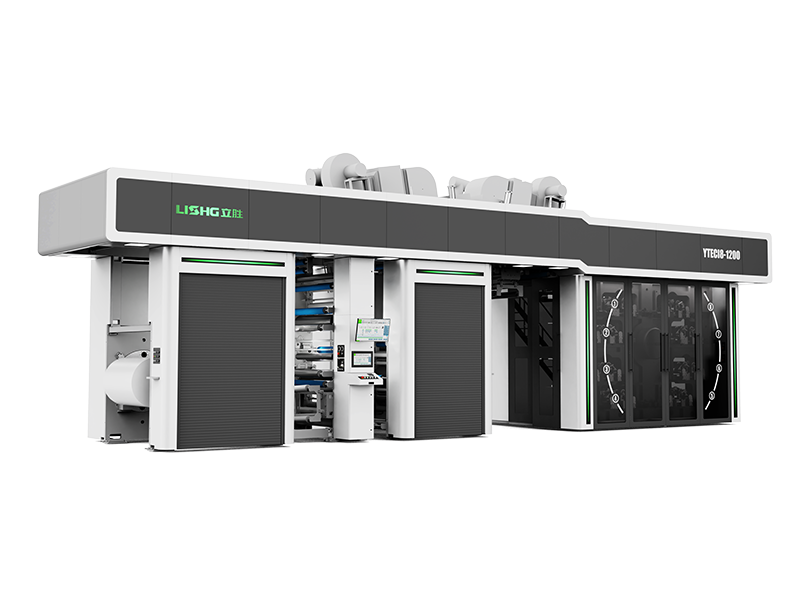
Gearless flexo—officially called gearless flexo printing press—is an advanced printing technology. It eliminates the use of mechanical gears, employing independent servo motors instead. In traditional gear-driven flexo printing presses, a large gear drives all printing cylinders synchronously. Gearless flexo printing presses, however, equip each cylinder with an independent servo motor. This means no mechanical gears, less friction, less wear, and a lower risk of misalignment.
At the heart of a gearless flexo printing press is its digital control system. This system synchronizes all components, including cylinder speed and ink application. Thanks to digital control, you can make real-time adjustments, switch jobs more quickly, and achieve extremely high precision. All of these are crucial for small-batch production. Unlike older flexo printing machines limited by gear pitch and requiring manual adjustments, gearless flexo printing presses can achieve unlimited repeat lengths. Therefore, it is ideal for short-run printing. It’s important to note that “gearless” refers only to the drive system, not the overall machine structure.
How Gearless Flexo Reduces Waste: Key Mechanisms
Gearless flexo printing press reduces waste through four key mechanisms. Each mechanism addresses a specific pain point in small-batch packaging production. Together, they aim to reduce material waste, improve quality, and utilize resources more effectively.
Minimal Setup Waste
The biggest advantage of gearless flexo printing press lies in the simplified setup process. Traditional flexo printing machines require a significant amount of time for manual adjustments, such as changing gears, calibrating cylinders, and matching colors. All of this results in a substantial waste of material. Gearless flexo printing press solves this problem by automating setup using servo motors and digital presets. Operators can save job settings in the machine’s software. This means job changes take only minutes instead of hours.
Compared to traditional flexo printing, this automation can reduce setup waste by up to 70%. For example, a small batch print job that wastes 200 meters of material on a geared printing press might only waste 60 meters on a gearless flexo printing press. Furthermore, the printing components are designed to be detachable. This makes inspection and maintenance easier, further reducing setup time and waste. Operators can quickly prepare for the next job without starting from scratch.
Precision Synchronization
Registration error, referring to the misalignment of colors or design elements, is a major cause of waste in small-batch printing. Traditional gear-driven printing presses suffer from gear backlash, wear, and mechanical drift, leading to registration errors and printing defects. Gearless flexo printing presses solve these problems through servo-driven synchronization, enabling control of each roller with an accuracy of ±0.05 mm or higher.
Since each roller is equipped with an independent servo motor, there is no mechanical backlash. Even with speed variations, the printing rollers maintain perfect synchronization. This high precision can reduce registration errors by up to 90%, significantly reducing the number of defective products that need to be discarded. Furthermore, gearless flexo printing presses avoid the “ink smudges” common in traditional systems, improving print quality and reducing waste caused by uneven ink application.
Versatile Substrate Handling
Small-batch packaging requires the use of a variety of different materials. Traditional flexo printing presses are typically optimized for only one material. Therefore, handling different materials requires either multiple machines or lengthy setup times, both of which lead to waste and inefficiency. Gearless flexo printing presses, with their precise tension control and adjustable servo motors, can better handle a wide range of substrates.
The digital control system allows operators to adjust roller speed, pressure, and ink application in real time. This applies not only to thin, stretchable plastic films but also to thick cardboard. This versatility reduces waste and time during material changeovers.
On-Demand Production
Overproduction is another form of waste. Processors often print more than they actually need in order to recoup setup costs. Gearless flexo printing press changes this. With minimal setup time and waste, you can truly achieve on-demand production. You print only the quantity you need, no more, no less.
With quick plate changes and minimal setup waste, processors can print precise quantities, avoiding overprinting, which reduces waste from unsold inventory. Brands can place orders based on the actual needs of specific promotions or product launches. This also aligns with circular economy principles, reducing packaging that ends up in landfills. Furthermore, gearless flexo technology works exceptionally well with water-based inks and closed-loop ink systems. This further reduces ink evaporation and consumption, thus reducing environmental pollution.
Real-World Impact: Waste Reduction Metrics
The waste reduction advantages of gearless flexo printing press are not just theoretical. Real-world data from processors worldwide confirm this.
Plate Waste: Processors using gearless machines report a 50% to 70% reduction in plate waste compared to conventional flexo printing.
Defect Rate: Precise synchronization can reduce defect rates by 80% to 90%.
Material Utilization: More efficient substrate handling and on-demand production can increase material utilization by 15% to 25%.
Foil Waste: Technologies such as EZ Foil integrated into gearless systems can reduce foil waste by up to 80%. This is particularly important for high-end packaging.
These figures add up to tangible cost savings. Due to reduced material costs, lower waste disposal fees, and increased efficiency, processors typically recoup their investment in gearless machines within 12 to 18 months.
Why Gearless Flexo is the Future of Short-Run Packaging
First, the demands of sustainable development and customer needs are driving brands towards green practices. Gearless flexo printing press reduces waste, perfectly aligning with global sustainable development goals. It helps processors reduce their carbon footprint. Unlike traditional printing presses, gearless systems require less maintenance, consume less energy, and generate less waste.
Second, personalized production is becoming key to maintaining competitiveness. More and more brands require small-batch customized packaging. Gearless flexo printing technology makes this possible with its flexibility. Quick changeovers, unlimited repeat lengths, and precise printing all mean you can meet the unique needs of personalized packaging without sacrificing quality or efficiency.
Third, operational efficiency is crucial for processors looking to remain competitive. Small-batch production using traditional technologies is often labor-intensive and inefficient. However, gearless flexographic printing technology automates key steps, reducing downtime and waste. This allows processors to take on more small-batch orders and improve profit margins.
Conclusion
Gearless flexo printing presses, employing advanced servo technology and digital integration, fundamentally solve the waste problem in small-batch packaging production and are transforming the entire industry. By reducing setup time, increasing accuracy, and enabling on-demand production, gearless flexo printing presses deliver tangible benefits.
For processors and brands looking to succeed in the era of small-batch, sustainable packaging, gearless flexo printing presses are not just an upgrade, but a necessity. They bridge the gap between flexibility and sustainability, proving that small-batch production can be both efficient and environmentally friendly. As sustainability regulations become increasingly stringent and customer demands for personalization continue to grow, gearless flexo printing presses will continue to lead the way, redefining the future of small-batch packaging production.
FAQs
Q1: What is the difference between a gearless flexo printing press and a conventional flexo press?
A1: Gearless printing presses use independent servo motors to control each printing cylinder. Conventional printing presses rely on mechanical gears.
Q2: Must a flexo printing press be gearless to handle small-batch printing jobs?
A2: No, conventional printing presses can also handle small-batch printing. However, due to longer setup times, registration errors are more likely to occur, resulting in more waste.
Q3: How much setup time can a gearless printing press save compared to a conventional printing press?
A3: Gearless printing presses can reduce setup time by 50% to 70%. This reduces setup waste, allowing processors to handle more small-batch printing jobs.
Q4: Can gearless flexo printing presses handle different substrates?
A4: Yes. Gearless technology is suitable for paper, cardboard, plastic film, aluminum foil, and even stretchable materials. It provides precise tension control and real-time adjustment.
Q5: What is the typical waste reduction rate of a gearless flexo printing press?
A5: Processors report that gearless flexo printing presses reduce waste by 50-70%, defects by 80-90%, and material utilization by 15-25%.
Q6: Are gearless flexo printing presses more expensive than traditional flexo printing presses?
A6: The initial investment is higher. However, due to savings in material waste and maintenance costs, the cost can typically be recovered within 12-18 months.
Q7: Does a gearless flexo printing press require specialized operator training?
A7: Although the technology uses digital control, the software is quite simple. Most operators familiar with traditional flexo printing can learn to operate a gearless flexo printing press with minimal training.
Q8: Can gearless flexo printing presses be used in high-end packaging?
A8: Yes. Gearless flexo printing presses reduce foil waste by up to 80% and provide high-quality print results. This makes them ideal for high-end packaging.
Q9: How do gearless flexo printing presses contribute to sustainability?
A9: They reduce material waste, lower energy consumption, and work even better with water-based inks. All of these contribute to achieving circular economy goals.
Q10: Are gearless flexo printing presses suitable for small processors?
A10: Yes. Their flexibility and waste reduction advantages make them ideal for small processors. They allow your products to remain competitive in the small-volume packaging market without compromising profitability or sustainability.


