



Space Utilization PK of 3 Mainstream Flexo Printing Machines: How Should Small and Medium-sized Factories or Large Factories Choose?
Introduction
In the rapidly developing flexible packaging printing industry, space is not just a numerical area, but also a strategic asset that directly affects production efficiency and operating costs. For packaging production enterprises, the key to choosing between Machine d'impression flexographique CI, Presse d'impression flexo sans engrenage, et Machine d'impression flexographique à pile lies in whether each model is suitable for the actual site and production needs of the factory. Small and medium-sized enterprises are often limited by the size of their factory buildings, while large production enterprises place more emphasis on optimizing their vast space to achieve large-scale production. This article deeply analyzes the space utilization characteristics of these three mainstream flexographic printers, providing targeted purchasing guidance for factories of different scales.
What are the 3 Mainstream Flexo Printing Machines?
What is CI Flexo Printing Machine?

Machine d'impression flexographique CI is a high-performance flexographic printing equipment, with the core feature of being equipped with a large central drum as the core support for all printing units. Its centralized structural design integrates the entire printing process, enabling high-speed and high-precision printing, and is known for its compact horizontal footprint, making it a space efficient choice in various production scenarios.
What is Gearless Flexo Printing Press?

Presse d'impression flexo sans engrenage is designed for high-speed, large-scale continuous production, replacing traditional mechanical gears with an advanced motor drive system. The equipment adopts a linear layout, with printing units and auxiliary workstations arranged in a straight line. It has excellent compatibility with automated production lines and is the preferred equipment for large production enterprises with vast fields.
What is Stack Flexo Printing Machine?

Machine d'impression flexographique à pile is a space optimized flexographic printing device that vertically stacks and arranges printing units instead of a horizontal layout. Its core advantage is its ultra compact footprint, making it an ideal choice for enterprises and small workshops with extremely limited horizontal space, with only high requirements for the vertical floor height of the factory building.
Understand the Space Footprint of Each Flexo Printing Machine
Machine d'impression flexographique CI
Machine d'impression flexographique CI excel with a centralized design that achieves a highly centralized printing process, with a conventional footprint of only 15-20 square meters and a vertical height of 4-6 meters. The printing units are arranged radially around the central drum, eliminating the redundant feeding, drying, and registration systems that occupy additional space in other models. It is very suitable for factories with tight ground space but sufficient vertical space.
Presse d'impression flexo sans engrenage
Presse d'impression flexo sans engrenage adopts a linear layout suitable for high-speed production, with printing units arranged in sequence with unwinding, drying, and rewinding stations. The standard model requires a floor area of 25-35 square meters, equipment length of 10-15 meters, and vertical height of 3-5 meters. The motor-driven gearless system reduces the overall weight and volume of the equipment, but linear design requires a narrow and elongated space.
Machine d'impression flexographique à pile
Machine d'impression flexographique à pile is the ultimate vertical space saving device, occupying an area of only 8-12 square meters, less than half of the Machine d'impression flexographique CI of the same color group, with a vertical height of 5-7 meters. The vertical stacking design does not require a wide horizontal operating space, perfectly adapting to small workshops and urban production workshops with limited space, balancing space efficiency and practical operational convenience.
Space Utilization for SMEs
SMEs in the packaging industry operate in factories of less than 500 square meters, with limited budgets for space expansion and renovation, and mainly focus on small batch, customized packaging orders. The preferred equipment for this type of enterprise is Machine d'impression flexographique à pile, which has a small footprint and can easily fit into small workshops. The vertical design also reserves space for storage, pre press equipment, and manual operation areas.
For SMEs with factory areas exceeding 1000 square meters and medium batch production needs, ci type flexo printing machine is an ideal choice. Its compact footprint is suitable for medium-sized factories, and its printing speed can handle larger orders than Machine d'impression flexographique à pile. At the same time, its precise color matching effect meets the high-quality requirements of food and pharmaceutical packaging.
Presse d'impression flexo sans engrenage is usually not suitable for SMEs, as their large linear footprint exceeds the carrying capacity of most small factories, and high-speed output has excessive performance for small batch production, which can easily lead to equipment idle and space waste.
Space Utilization for Large Factories
The factory area of large packaging production enterprises reaches thousands of square meters, and the production lines are designed specifically for continuous and large-scale production. For such enterprises, the core of space utilization is not simply saving area, but optimizing layout to achieve automation and efficient processes. Presse d'impression flexo sans engrenage is the golden choice in this scenario. Its footprint is negligible in large factories, and a high-speed output of 500-600 meters per minute can maximize production efficiency per unit area.
Machine d'impression flexographique CI also play an important role in large factories, especially suitable for professional production lines. Its compact footprint is very suitable for high-precision packaging production lines, such as medical equipment bags, high barrier food packaging bags, etc. Large factories often use Machine d'impression flexographique CI in combination with Presse d'impression flexo sans engrenage to achieve mass production while completing high-value niche printing orders.
Machine d'impression flexographique à pile is rarely used in large production bases because their low-speed output cannot meet the needs of large-scale production. Only some large factories use them for small batch customized orders or sampling, using their compact footprint to avoid interference with the main production line.
Key Considerations Beyond Raw Footprint
The factory area is the primary criterion for selection, but when choosing a flexographic printer, enterprises also need to consider other factors:
Layout flexibility: Presse d'impression flexo sans engrenage has linear expandability and can add other functional modules along the production line; Machine d'impression flexographique CI has a fixed radial layout, but can be integrated with compact auxiliary systems; Machine d'impression flexographique à pile has limited layout flexibility due to its vertical design, but it can be placed in corners of the factory or installed against the wall.
Vertical space: Machine d'impression flexographique à pile has the highest requirements for layer height, followed by Machine d'impression flexographique CI et Presse d'impression flexo sans engrenage. Factories with low ceilings need to renovate the site or choose shorter models.
Scalability: Machine d'impression flexographique CI provides a development path for SEMs that pursue capacity improvement but currently have limited room for upgrading; large factories can expand Presse d'impression flexo sans engrenage lines by integrating other equipment; Machine d'impression flexographique à pile usually do not have room for capacity expansion due to limited output capacity.
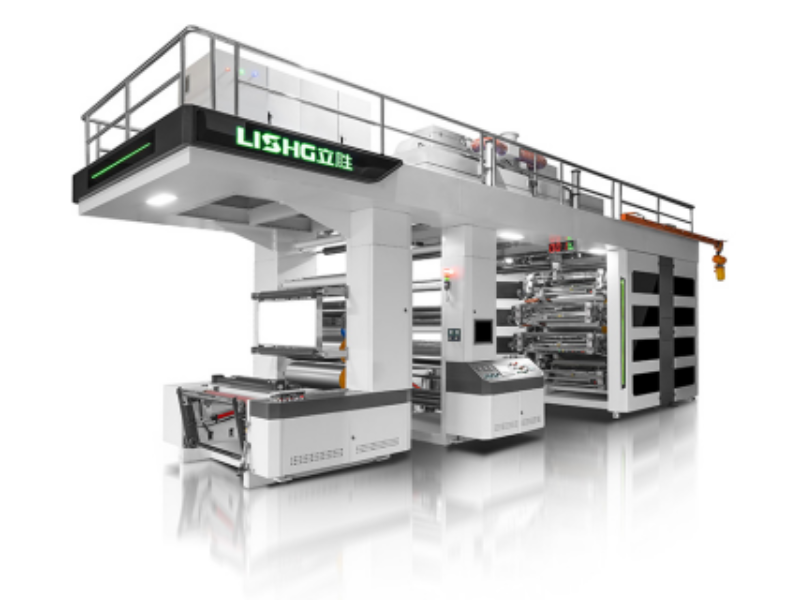
Why Choose Lisheng Flexo Printing Machines?

Space efficiency is the core of Lisheng‘s design philosophy, and each model is designed to meet the unique needs of SMEs and large factories.
Machine d'impression flexographique à pile adopts a vertical stacking unit design, which can achieve ultimate floor area savings. The open frame structure also allows small teams to easily operate and maintain it.
Machine d'impression flexographique CI relies on the central cylinder to achieve precise color matching and stable multi-color printing, saving 30% of horizontal space compared to traditional online models. It is an ideal choice for food and pharmaceutical packaging.
Presse d'impression flexo sans engrenage optimizes the linear layout, reduces the spacing between units, reduces the footprint by 10%, and can be seamlessly integrated with automated production lines to meet the needs of large-scale production.
All models of Lisheng have achieved a balance between space optimization and reliable performance, ensuring that every inch of space in the factory can create maximum value.
Conclusion
Space utilization is the decisive factor in choosing a flexographic printer, and the appropriate model selection depends entirely on the factory’s scale, production goals, and site limitations. Machine d'impression flexographique à pile is the preferred choice for SEMs. Presse d'impression flexo sans engrenage optimizes the space utilization for large-scale automated production, while Machine d'impression flexographique CI perfectly fill the gap between the two.
Viewing space as a strategy, accurately matching the selection of aircraft models with site constraints and production needs is necessary to transform the factory into a more efficient and profitable production space. Choosing the right flexographic printer can create higher production value for every inch of the factory area.
FAQ
Q1: What is the minimum floor height requirement for a Stack Flexo Printing Machine?
A1: The standard model requires a factory floor height of 5-7 meters, and some customized models can be adapted to slightly lower floor heights.
Q2: Can a CI Flexo Printing Machine be integrated into the automated production line of large factories?
A2: Yes. Although it has a radial layout, it can be integrated with compact systems and adapted to professional automated production lines in large factories.
Q3: For SMEs with 500 square meters of space, which flexographic printer offers the best cost-effectiveness?
A3: Stack Flexo Printing Machine is the optimal choice, with its ultra compact footprint, perfectly suitable for small and medium-sized enterprises’ small batch customized production.
Q4: Can functional modules be added after purchasing a Gearless Flexo Printing Press?
A4: Yes, its linear layout design supports flexible addition of functional modules in the later stage, with good scalability.
Q5: How much space can a CI Flexo Printing Machine save compared to a traditional inline flexographic printer?
A5: Under the same color group specifications, it is reduced by 30% compared to traditional inline flexographic printers.


