



Why Global CPG Brands Prefer CI Flexo for High-volume Packaging Runs
Introducción
In the rapidly evolving Consumer Packaging (CPG) industry, packaging is far more than just a protective shell for products; it’s the “fifth P” in marketing. It’s a silent salesperson on the shelf, a carrier of brand identity, and a key factor in consumers’ purchasing decisions. For global CPG giants, they must deliver billions of compelling, high-quality packages in a highly competitive market with lower costs and shorter lead times.
While packaging printing technologies vary widely, CI Flexo has become the industry mainstay for high-volume printing. This article will explore why most global brands favor this technology to bridge the gap between their marketing vision and operational efficiency needs. At the heart of this preference lies the advanced engineering of Máquina de impresión flexográfica CI, which are constantly evolving to meet the demanding requirements of modern production.
¿Qué es CI Flexografía?

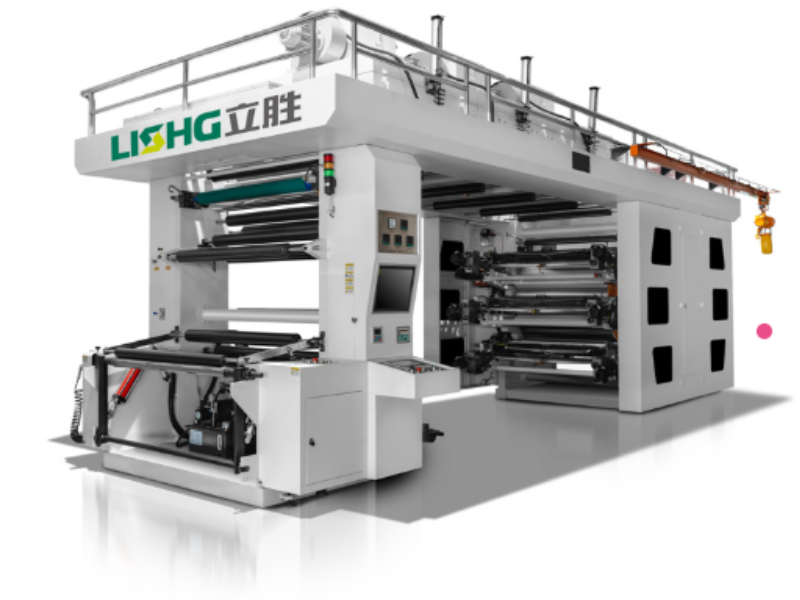
CI Flexo, or central impression flexographic printing, is a high-speed printing method unique in its mechanical structure. Unlike stacked or inline printing presses, ci type flexo printing machines use a large central cylinder surrounded by multiple printing stations. As the substrate moves around this cylinder, it remains stationary. This design is crucial because it eliminates tension variations and ensures that each color applied at each station is perfectly aligned with the next color. CI flexo printing has become the gold standard for printing on flexible materials such as plastic films and foils, which are the mainstream materials for CPG packaging. The sophisticated design of modern ci flexo printing machines allows processors to push the limits of impresión flexográfica.
Why Does CI Flexo Matter for CPG?
Unrivaled Speed & Throughput
In high-volume production factories, time is money. Modern ci flexo printing machines are designed to complete printing jobs at astonishing speeds. Speeds typically reach 300 to 500 meters per minute or even higher, far exceeding other printing methods, ensuring the production line never runs out of stock. The central cylinder design of a máquina de impresión flexográfica is key to maintaining high-speed operation without compromising quality.
Perfect Registration & Consistent Quality
Because the substrate adheres tightly to the central cylinder of the ci type flexo printing machine, distortion or misalignment is virtually eliminated during color printing, achieving near-perfect registration. For a CPG brand, this means that the brand logo on the first package out of millions of prints is just as sharp and clear as the logo on the last, maintaining brand integrity in the global market. This high degree of consistency is a hallmark of high-quality impresión flexográfica.
Superior Substrate Versatility
The CPG world is increasingly adopting more complex and sustainable materials. CI flexo printing offers unique advantages in navigating this shift. It excels at printing on a wide range of substrates, from traditional paper and foil to challenging flexible films such as BOPP, PE, and PET. This adaptability is crucial as brands experiment with thinner paper and new materials to reduce plastic usage. Máquinas de impresión flexográfica CI‘ advanced tension control systems handle these delicate new materials without tearing or stretching.
Lower Total Cost for High-Volume Runs
While digital printing is well-suited for small-volume production, impresión flexográfica offers a significant unit cost advantage for mass production. The plate-making cost of máquinas de impresión flexográfica is far lower than the engraving cylinders required for gravure printing, and energy consumption is typically higher. For orders exceeding a certain quantity, CI flexo printing offers an even more pronounced cost advantage, especially when using high-speed ci flexo printing machines.
Strong Alignment with CPG Sustainability Goals
CI flexo printing aligns perfectly with net-zero emissions and the circular economy goals. Modern ci flexo printing machines utilize solvent-based, water-based, and even UV inks. In particular, water-based inks significantly reduce volatile organic compound (VOC) emissions compared to traditional solvent-based gravure printing. Furthermore, this technology has proven effective for recycled films and single-material structures, which are easier to recycle than some composite materials. Therefore, ci flexo printing machines are a crucial tool in the sustainable packaging transformation process.
Automation & Digital Integration
In recent years, the digital transformation of analog CI flexo presses has been one of the most significant changes in the industry, with today’s ci flexo printing machines becoming intelligent. Leading manufacturers have introduced disruptive automation features to meet the consumer goods industry’s demands for speed and consistency.
oneECG (Extended Color Gamut): This technology allows printing presses to reproduce nearly 90% of the color gamut using only a fixed palette of 7 colors (CMYK + orange, green, and magenta). It also eliminates the need to clean spot color inks, significantly reducing changeover time and material waste on máquinas de impresión flexográfica.
smartGPS (Graphic Positioning System): By automating the setup process offline, this technology ensures that jobs can begin printing immediately after loading, greatly reducing setup time and material waste.
CI Flexo vs. Alternatives: Why CPG Brands Choose It?

CI Flexo vs. Gravure Printing: While gravure printing offers superior quality, it requires expensive and bulky rollers, has a production cycle of several weeks, and costs thousands of dollars. For brand owners who need to frequently iterate packaging designs or manage multiple SKUs, ci flexo printing offers faster turnaround times and lower upfront costs. Its print quality is now comparable to gravure printing.
CI Flexo vs. Digital: Digital printing is ideal for personalized customization or trial printing, but its unit cost is too high, making it unsuitable for large-scale production. Impresión flexográfica, on the other hand, can provide the economies of scale needed for product launches nationwide and even globally.
Real-World CPG Applications of CI Flexo
Flexible Packaging: Snack and frozen food bags and pouches. These flexible packages are typically printed using high-speed ci flexo printing machines.
Labels & Shrink Sleeves: High-volume beverage bottle labels and wrap-around labels. Printing these materials requires the high precision of ci type flexo printing machines.
Films: Hygiene products and industrial packaging films.
For example, some companies have successfully broken away from the traditional gravure printing model by adopting ci flexo printing, and by utilizing the rapid setup of modern máquinas de impresión flexográfica, they can deliver high-quality frozen food packaging in just three days.
The Future of CI Flexo in CPG Packaging
El futuro de ci flexo printing is bright, driven by principles of digitization, automation, connectivity, and sustainability. Looking ahead to 2029, the market for máquinas de impresión flexográfica is projected to experience significant growth.
We will see wider adoption of artificial intelligence in predictive maintenance and quality control for ci flexo printing machines. More importantly, ci flexo printing will lead the development of an energy-efficient circular economy. Upcoming initiatives and innovations will focus on “automation-driven platemaking” workflows designed for recycled materials and biodegradable films, ensuring CPG brands can maintain product shelf appeal while fulfilling their sustainability commitments. CI type flexo printing machines are evolving into fully connected, data-driven, and superior tools.
Conclusión
For global CPG brands, choosing a printing technology is a strategic business decision. CI flexo printing has proven ideal for high-volume production. It can quickly meet market demands, flexibly adapt to new sustainable materials, ensure quality to maintain brand value, and balance cost-effectiveness to safeguard profits. In the future, by adopting the latest automated innovations in ci flexo printing machines, brands will not only be printing packaging, but also safeguarding their supply chain.
Preguntas frecuentes
Q1: Can CI flexographic printing match the quality of gravure printing?
A1: Yes, the quality gap in modern CI flexo printing has significantly narrowed. With advancements in high-definition plates and ECG technology, flexo printing achieves superior detail and color consistency, and is generally less expensive and delivers faster than gravure printing.
Q2: Why is CI flexographic printing considered a more sustainable technology?
A2: CI flexo printing presses are extremely efficient in ink and energy use. They can easily use water-based inks with lower VOC emissions. Furthermore, they excel at printing thinner, recyclable single-material structures, which is crucial for the circular economy.
Q3: What does “CI” stand for? Why is it so important?
A3: “CI” stands for Central Impression. It refers to the large central cylinder surrounding the substrate in a CI flexo printing press. It stabilizes the material during printing, ensuring perfect registration, a key advantage of CI flexo printing over other press configurations.
Q4: Can CI flexo presses handle short-run printing, or are they only suitable for long-run printing?
A4: While CI flexo printing presses dominate the long-run printing market due to their speed and low unit cost, modern automated printing presses are becoming increasingly efficient in medium-run printing. Features such as oneECG and smartGPS significantly reduce setup waste on flexo printing presses.
Q5: What are the main maintenance considerations for a CI flexoprinting press?
A5: The key to daily maintenance of a CI flexo printing press lies in the system’s core components: the central cylinder and its bearings, which must be kept clean and operate smoothly. Regularly checking the tension control sensor and automatic registration system ensures the machine consistently delivers the high-speed, high-quality output required by consumer brands.


