Written by: LISHG Technical Team · Reviewed by: Flexographic Printing Engineering Team · Last updated: August 2026
This buying guide covers what CI is, how to choose specs, how to evaluate a manufacturer, case evidence and manufacturing lessons — then points you to the full price & cost guide and a configuration-based quotation.
Definition · How to choose · Decision scenarios · Buyer mistakes · Engineer notes · Cost · RFQ · Manufacturer · Case evidence · Manufacturing lessons · How it works · Types · Materials · Compare · Applications · Speed · Components · FAQ · Next · Related guides
What Is a CI Flexo Printing Machine?
A CI flexo printing machine is a central-impression flexographic press that uses one large central cylinder to support the substrate while multiple printing units apply different colors. It is primarily used for high-speed printing on flexible packaging films such as PE, BOPP, PET and CPP.
In buyer and OEM language, the same architecture appears as a CI flexo machine, CI flexo press, or central impression flexo press — color stations around one drum with continuous web support for multi-color film register.
New to CI flexo? For beginner definition, principle and components, see What Is a CI Flexo Press? The Beginner’s Complete Guide. This page focuses on how to choose specs, configuration and cost.
What Does “CI” Mean in Flexographic Printing?
CI stands for Central Impression. Multiple printing units sit around one large central impression cylinder that continuously supports the web as each color is printed — which helps maintain registration on flexible and extensible substrates.
In industry usage, “CI flexo,” “CI press,” and “central impression flexo” refer to the same architecture. The defining element is the shared central drum, not the ink system alone. Deeper beginner context: beginner CI flexo guide.
How to Choose a CI Flexo Printing Machine
Use this eight-step path to lock production requirements before you compare presses or open an RFQ — substrate first, then width, colors, usable speed, drive, ink and automation.
Buyer decision path (Steps 1–8)
Parameter → recommendation logic
| Parameter | Options | Recommendation logic |
|---|---|---|
| Material | PE / BOPP / PET / CPP / Paper | PE and thin BOPP need closed-loop tension + strong drying first; PET/CPP tolerate higher heat but still need register discipline; paper CI configs differ — do not copy a film RFQ line. |
| Printing Width | 600 / 800 / 1000 / 1300 / 1600 mm | Size to max finished web + trim you actually run. Over-width CapEx rarely pays for “maybe later”; under-width forces waste or dual fleets. |
| Colors | 4 / 6 / 8 / 10 | Count separations on the worst SKU. If most work is process + 1–2 spots, 6 often beats 8 on TCO; step to 8/10 only when white/varnish/extra spots are routine. |
| Speed | <200 / 200–300 / 300–400 / 400+ m/min | Buy usable m/min with drying and tension, not brochure max. <200 → entry class; 200–300 → mid; 300–350 film targets → mid-high class; 400+ → high-output platforms only. |
| Ink | Solvent / Water-based | Solvent sets dryer / VOC / explosion-protection path; water-based needs adhesion + drying capacity matched to film — ink choice is project-defined, not a free press option. |
| Run Length | Short / Medium / Long | Short / multi-SKU → sleeves + auto register pay back; long stable SKUs can accept simpler automation if changeovers are rare. |
| Automation | Standard / Servo / Gearless | Standard/gear for stable long runs and CapEx focus; servo for stronger register automation; full gearless when high usable speed and frequent repeats dominate. |
| Budget | Low / Medium / High | Low → fewer colors, modest width/speed, standard drive; Medium → mainstream 6-color film CI; High → extra stations, gearless, drying/register packages that cut waste on thin film. |
Deeper decision criteria (still decide these on the RFQ)
| Decision criterion | What to decide | Why it matters |
|---|---|---|
| Tension | Unwind / infeed / outfeed / rewind zones | Critical for thin PE / BOPP — stretch shows as register drift |
| Drying | Interstation + tunnel capacity | Often the real usable-speed limit on solvent film work |
| Register | Manual / semi / full auto (pre-reg + closed-loop) | Pays back on short runs and multi-color film |
| Anilox | Volume / line screen inventory plan | Density and solids control — inventory is part of OpEx |
| Sleeve / plate | Sleeve change vs conventional plate cylinders | Affects changeover time and tooling CapEx |
| CapEx | Press + drying + automation + sleeves | Wider / faster / more colors raise CapEx |
| OpEx | Energy, ink, solvent, labor, spares | TCO often beats sticker price over 3–5 years |
| Startup waste | Meters to first good roll | Register + recipes dominate film jobs |
| Changeover time | Job-to-job minutes | High SKU mix favors sleeves + automation |
Based on your production requirements, choose press class / drive / color count accordingly.
Example manufacturer speed classes (LISHG platforms — manufacturer data, not industry law): Ultra ≈150–200 · Apex ≤250 · King ≤350 · Master ≤500 m/min. Film · 1000–1300 mm · 350 m/min → King class.
Step 8: When the seven decisions above are clear, request a configuration-based quotation — not a fixed catalog price.
Example Decision Frameworks (When to Specify Which CI Class)
These are industry-style decision patterns — not a claim that one brand is universally best. Use them to sanity-check width, speed, drive and color count before you open product pages.
For a converter printing PE/BOPP film at about 1000–1300 mm with a usable target around 350 m/min (a usable band around 300 still maps inside King ≤350 — never treat 300 as the King ceiling), a servo or gearless CI press is typically worth considering when registration stability and changeover efficiency are priorities. Commercial example: Film · 1000–1300 mm · 350 m/min → LISHG King Series (platform ≤350 m/min).
When the mix is PE-film heavy, register-critical and thinner gauges, prioritize closed-loop tension, drying capacity and automatic register over chasing the highest brochure m/min. A mid-high CI class with strong web handling often ships more good meters than a faster platform that cannot hold thin film.
If artwork is mostly 4–6 color and runs are medium length, a 6-color CI frequently beats an 8-color on total cost of ownership — fewer stations mean less drying load and faster changeovers when the seventh and eighth units sit idle. Decision depth: 6 color vs 8 color CI flexo — how to choose. If you already know you need six colors, compare available 6-color CI configurations here: King Series 6-Color CI.
When not to specify CI: low-color board/paper opportunistic short runs often fit stack or inline better; ultra-long stable SKUs may still amortize gravure cylinders. Compare architecture on CI vs stack flexo and CI vs inline flexo before you lock CapEx.
5 Things Buyers Usually Get Wrong When Buying a CI Flexo Press
These are patterns we see repeatedly on RFQs and factory visits — not slogans. Fix them early and the rest of the buying process gets cleaner. For price drivers and configuration quotes, see CI flexo printing machine price and how to choose.
- Choosing speed from brochure max alone. Mechanical nameplate is a ceiling, not a production plan. Drying, tension, ink coverage and job mix usually set usable meters per minute long before the drive hits its theoretical limit. Ask vendors for the usable window on your substrate and ink system — see mechanical vs usable speed.
- Selecting too many colors “just in case.” An idle seventh or eighth station still costs CapEx, drying load, sleeve inventory and changeover minutes. Count separations on the worst recurring SKU; if most work is process plus one or two spots, a 6-color CI often beats an 8-color on total cost of ownership. Step up only when white, varnish or extra spots are routine. Full decision guide: 6 vs 8 color how to choose.
- Ignoring drying capacity. On solvent film work, interstation and tunnel drying frequently become the real speed limit. Buying a faster drive class without matching dryer capacity leaves you paying for meters you cannot run dry without solvent odor, blocking or register drift. Size drying with the target usable speed, not after the purchase order.
- Underestimating tension control — especially on PE. PE and other extensible films stretch under heat and pull. Weak unwind/infeed/outfeed/rewind zoning shows up as color-to-color drift that no amount of “register software” fully hides. For PE-heavy mixes, closed-loop tension belongs in the RFQ core, not as an optional checkbox.
- Comparing machine prices without comparing automation configuration. Two CI flexo machine cost quotes can look similar until you align drive class, auto-register, sleeve change, tension loops and dryer packages. A cheaper sticker price with thin automation often spends more in startup waste and changeover labor over a few years. Compare like-for-like scopes — see CI flexo printing machine price.
Engineer’s Recommendation & How We Size a CI Configuration
When LISHG applications engineers walk an RFQ, the path is usually the same: substrate family and gauge feel → target usable production speed → web width → color count → drive / drying / register package → CapEx vs OpEx for the real job mix. Brochure mechanical max comes late, not first.
Configuration sizing (practical steps)
| Target / decision | How we typically size it |
|---|---|
| 300–350 m/min film targets | Mid-high class with drying and tension matched to that band. LISHG example: King ≤350 m/min (e.g. King Series 6-color). Apex (≤250) is not the right fight for a 350 target. |
| 400–500 m/min brochure targets | Only if drying, tension and job mix can support that usable window. LISHG Master ≤500 m/min is one example high-output platform — still not a promise that every job runs at 500. |
| 6 vs 8 color | Default to 6 when artwork is mostly process + limited spots. Move to 8 when white/varnish/extra spots are weekly reality. Guide: 6 vs 8 how to choose. If you already know you need eight colors, compare available 8-color CI configurations here: 8-color full servo CI. |
Why a 500 m/min CI flexo press may not run at 500 m/min in production: Nameplate speed assumes the dryer can remove solvent, the web stays dimensionally stable, coverage is manageable and register stays inside tolerance. Heavy solids, thin-gauge PE, tight register or a multi-SKU changeover day will pull usable speed well below mechanical max. Detail and factor table: Mechanical Speed vs Usable Production Speed.
CI Flexo Printing Machine Price & Cost (Summary)
There is no universal list price for a CI flexo printing machine. Cost depends on substrate, web width, color count, usable speed class, drive system, drying capacity, register automation and tooling — so LISHG quotes from a configuration, not a fixed catalog number.
For buyers comparing quotes, match scopes (dryer package, auto-register, sleeves) before comparing stickers. Brochure m/min is not usable m/min — drying energy, changeover time and startup waste often dominate real TCO.
- Wider webs and more color stations raise CapEx (and often dryer / changeover OpEx).
- Higher usable-speed bands need matched drive, structure and drying — not nameplate alone.
- Servo / gearless and auto-register raise CapEx; they can cut waste OpEx on short SKUs.
- Sleeves, installation, training and spare-parts readiness belong in the project cost, not only the press sticker.
- CI vs gravure tooling economics depend on run length and changeover frequency — see architecture compare.
Full guide: CI Flexo Printing Machine Price → (cost-factor table, RFQ checklist, configuration quote path).
What to Send for a CI Flexo Quotation
Before requesting a quote, lock substrate, printing width, colors, usable speed target, ink type and production mix. Full RFQ checklist and cost drivers: price guide RFQ.
- Substrate · printing width · number of colors
- Required usable printing speed · ink type
- Production requirements (run length, changeover, register need)
Choosing a CI Flexo Printing Machine Manufacturer
When evaluating a CI flexo printing machine manufacturer, prioritize engineering capability (CI drum, tension, drying), custom configuration to your substrate/width/colors/usable speed, register and dryer packages, FAT testing, installation, training, spare parts and after-sales — not brochure headlines alone.
LISHG manufactures central impression flexographic presses for flexible packaging converters (since 2005, Ruian). Buyers evaluating manufacturers should use an RFQ with matched scope — see RFQ checklist and the full price & cost guide — rather than a fixed list price.
Case Evidence: PawPack Pet Food Packaging
Scope: LISHG published case-study results (PawPack project) — not industry averages or industry benchmarks.
PawPack Packaging Co., Ltd. (Thailand) is a published LISHG installation for dog food bags, cat food packaging and pet treat pouches. Machine: King Series 8-Color High Performance CI.
Published project facts
| Field | Published detail |
|---|---|
| Customer type | Flexible packaging converter |
| Customer | PawPack Packaging Co., Ltd. (Thailand) |
| Application | Dog food bags, cat food packaging, pet treat pouches |
| Substrate | PE / BOPP / PET (+ laminates) |
| Colors | 8 |
| Configuration | Sleeve CI · full servo gearless · auto pre-reg / closed-loop register · closed-loop tension |
| Problem | Long setups / register recovery / high setup waste on short SKUs |
| Result | Published KPIs below + ≈16-month payback |
| Width | Project-defined (confirm on case study / RFQ) |
| Speed | Usable speed set by job tension / drying / register — not published as a single fixed m/min on this page |
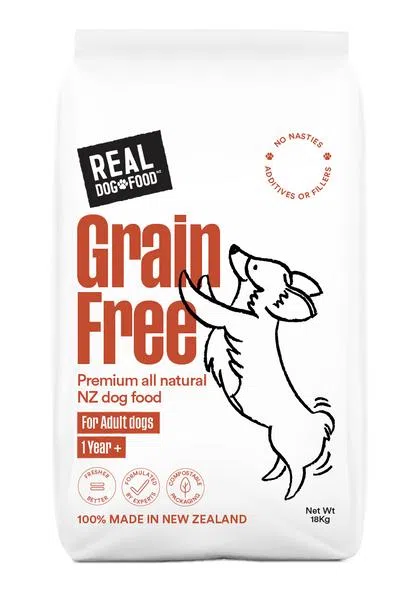
Dog food bags
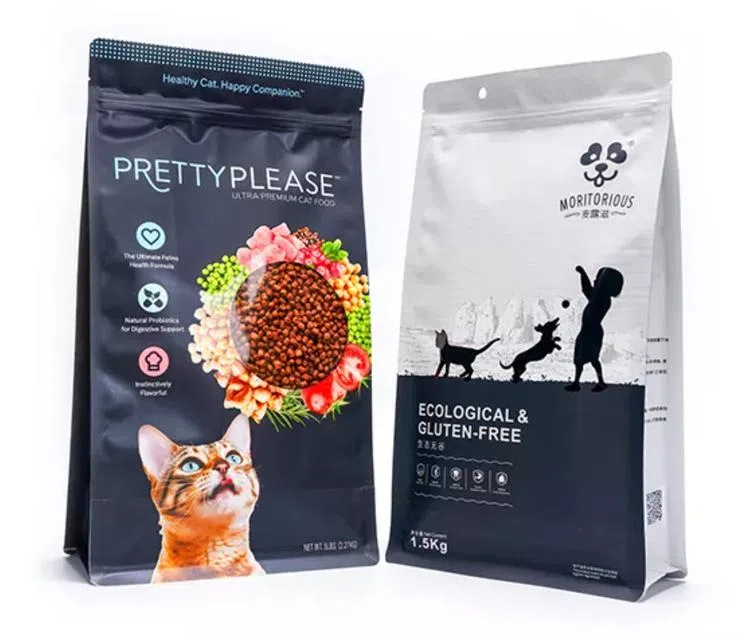
Cat food packaging
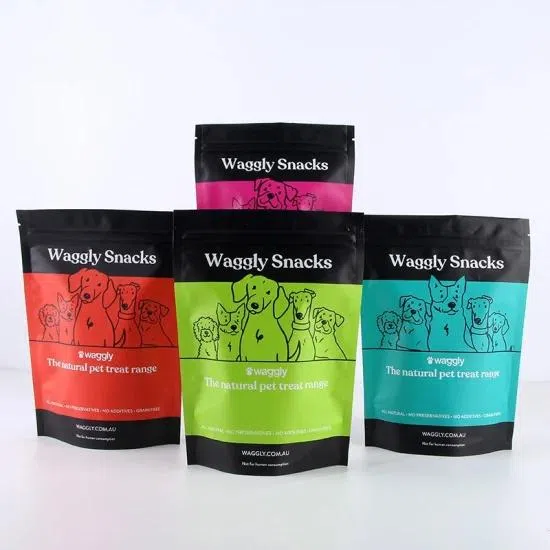
Pet treat pouches
Case-measured KPIs
LISHG published case-study results (PawPack project) — not industry averages or industry benchmarks.
| Published case KPI | Measured result |
|---|---|
| Register accuracy | ±0.08 mm (case-measured; catalog ±0.15 mm is a separate figure) |
| Productivity | +35% |
| Waste | −42% |
| Changeover time | −50% |
| Payback | ≈16 months |
Measurement method: Camera-based automatic register control feedback during production; productivity / waste / changeover compared vs the customer’s previous process on the same application family.
Before → After
- Before: Long setups between flavor / private-label jobs; register recovery eating film; high setup waste on short SKUs.
- After: Changeover −50%; case-measured register ±0.08 mm; waste −42%; productivity +35%.
Full case study: PawPack pet food packaging flexo printing case study →
What We Have Learned From Manufacturing CI Flexo Presses
Engineering lessons from building and commissioning central impression presses for film converters — production experience, not a product brochure. Where a manufacturer platform speed class is mentioned, it is labeled as manufacturer data, not industry law.
| Lesson | What we see in real production |
|---|---|
| 5 buyer mistakes (summary) | Brochure max alone · too many colors “just in case” · ignoring drying · underestimating PE tension · comparing prices without matching automation. Detail: 5 buyer mistakes. |
| Why advertised speed ≠ production speed | Mechanical max is only a ceiling. Solvent load, ink system, web gauge and operator skill set the usable m/min that ships good rolls. See mechanical vs usable speed. |
| How PE tension affects register | PE stretches under heat and pull. Weak unwind/infeed/outfeed/rewind zoning shows as color-to-color drift that register software alone cannot fully hide — closed-loop tension belongs in the RFQ core for PE-heavy mixes. |
| Why 6-color can beat 8-color | If artwork rarely needs the extra stations, 6-color often wins on changeover time, drying load and startup waste — more colors are not free quality. Full logic: 6 vs 8 how to choose. |
| What to check before a CI flexo quotation | Lock substrate, width, colors, usable speed, ink and production mix — then send a matched-scope RFQ. Checklist: RFQ · full depth: price guide. |
| Why 350 m/min is not universal | A 350 m/min target needs drying, tension and drive class that match that band. Film · 1000–1300 · 350 → King (≤350). On lighter platforms (LISHG example: Apex ≤250), chasing 350 is usually the wrong fight. |
| Buyers overestimate speed needs | Many plants buy for a peak they run a few days a year. Average job mix + changeover frequency usually matter more than the brochure number. |
| Drying becomes the bottleneck | When solvent ink and dense coverage meet thin film, drying capacity — not gear strength — often sets the real production ceiling. |
| Gear-driven vs servo in practice | Gear-driven still serves stable long runs well. Servo / gearless pays off when register automation, short runs and frequent repeats dominate the week. |
| How startup waste falls | Waste drops when tension recipes, anilox inventory, sleeve change discipline and auto-register reduce the meters spent “finding” color. |
| When you should NOT buy CI | If jobs are low-color paper/board, very short opportunistic runs, or ultra-long gravure SKUs, stack, inline or gravure may fit better than a CI investment. |
How Does a CI Flexo Printing Machine Work?
A CI flexo press feeds a continuous web from unwind through tension control, meters ink via chamber / doctor blade / anilox onto the plate, prints each color against one central impression cylinder, dries the ink between stations, and rewinds the printed roll under controlled tension. Buyers care because tension, drying and register — not just the drum — set usable speed.
Process flow
| Step | What happens | Why it matters |
|---|---|---|
| Unwinding | Substrate roll enters at the unwinder | Unstable unwind causes wrinkles and register issues |
| Tension | Web tension keeps film dimensions stable | Core for PE / BOPP / PET |
| Ink transfer | Chamber → doctor blade → anilox → plate | Anilox volume controls density |
| CI cylinder | All colors print against one central drum | Defining difference vs stack / inline |
| Drying | Solvent removal / curing between colors | Often the real usable-speed ceiling |
| Rewinding | Printed web rewound under controlled tension | Affects lamination and bag-making |
Drying and tension often limit usable m/min more than brochure mechanical max.
What Are the Main Types of CI Flexo Presses?
CI flexo presses are commonly typed by number of colors (4 / 6 / 8 / 10+) and by drive system (gear-driven, servo gear, or gearless). More colors do not automatically mean better print quality — they add stations, drying load, and changeover complexity. Product links below are example configurations for exploration.
By color count
| Colors | When it fits | Example config |
|---|---|---|
| 4-color | Simple graphics, logos, limited spots | 4-color CI → |
| 6-color | Mainstream flexible packaging | 6-color CI → |
| 8-color | Premium / multi-spot artwork | 8-color CI → |
| 10+ | Specialized only | Justify every extra station |
6 color CI flexo machine
Mainstream for flexible packaging when process work plus limited spots covers most SKUs. Decide with industry logic first: 6 vs 8 how to choose. If you already know you need six colors, compare available 6-color CI configurations here: King Series 6-color CI.
8 color CI flexo machine
Fits when white, varnish or extra spots are routine — not idle “headroom.” CapEx, dryer load and sleeve inventory rise with every station. Guide: 6 vs 8 how to choose. If you already know you need eight colors, compare available 8-color CI configurations here: 8-color full servo CI.
Web width (brief)
Common film bands include 1000 / 1300 mm (and 1600 mm only when finished webs truly need it). Size to max finished web + trim. Pair width with usable speed — Film · 1000–1300 mm · 350 m/min → King class (≤350), not an entry platform. Product / price intents: product pages and price guide.
By drive system
| Drive | When it is typically chosen | Example LISHG platform |
|---|---|---|
| Gear-driven | Conventional packaging; lower CapEx focus | King Series |
| Servo gear | Stronger register automation | Apex Series (≤250 m/min class) |
| Gearless (full servo) | High usable speed / high automation | Master Series (≤500 m/min class) · e.g. 8-color full servo |
What Materials Can a CI Flexo Press Print?
A CI flexo press can print PE, BOPP, PET, CPP, paper, laminated films and other flexible packaging webs when configured for thickness, ink system and drying. Thin extensible films are a primary reason converters choose central impression architecture.
| Material | Typical use | Buyer check |
|---|---|---|
| PE film | Bags and film packaging | Thickness, tension, drying |
| BOPP film | Snack / laminate packaging | Gauge, heat / tension |
| PET film | Premium flexible packaging | Adhesion, drying, register |
| Paper | Paper packaging webs | Grade / basis weight — confirm paper CI config |
PE / BOPP / PET (brief): PE needs closed-loop tension + drying first; BOPP still needs gauge-aware heat/tension; PET tolerates more heat but adhesion/register still matter. Do not copy one film RFQ onto another. Related: film · flexible packaging · price.
Paper: Paper CI configs differ from film — confirm grade/basis weight on the RFQ. Flexible packaging guide →
CI Flexo vs Stack Flexo vs Rotogravure
CI flexo is generally preferred for thin and extensible films because the central impression cylinder continuously supports the web during multi-color printing. Stack flexo stacks units vertically with less continuous support between stations. Gravure remains competitive for very long high-volume runs with engraved cylinders. Neither is universally “better.”
| Feature | CI Flexo | Stack Flexo | Gravure |
|---|---|---|---|
| Configuration | Central drum | Vertical stack | Engraved cylinders |
| Thin film register | Excellent | Good | Excellent |
| Short / mixed runs | Good–Excellent | Excellent | Often weaker |
| Tooling / plates | Flexo plates | Flexo plates | Engraved cylinders |
For a deeper CI flexo vs rotogravure and CI vs stack flexo read, start with the spoke pages below. Tooling / run-length tradeoffs without fake list prices belong with the price guide and this architecture table.
What Is a CI Flexo Printing Machine Used For?
CI flexo presses are commonly used for flexible packaging, food packaging, pet food packaging, plastic bags, film packaging and paper packaging — especially where multi-color register on film webs matters.
| Application | Why CI fits | Related guide |
|---|---|---|
| Flexible packaging | Primary multi-color film / laminate use | Flexible packaging → |
| Plastic / shopping bags | Retail and industrial bag printing | Plastic bags → |
| Pet food packaging | High-quality graphics on film | Pet food → |
| Film packaging | PE / BOPP / PET webs | Film packaging → |
Mechanical Speed vs Usable Production Speed
There is no universal industry maximum speed for CI flexo. Mechanical speed is the press nameplate ceiling. Usable production speed is the m/min you can hold while drying, tension, register and quality stay inside tolerance for your job mix. Usable speed depends on drying capacity, web tension stability, substrate type and ink system — not brochure mechanical max alone.
Factors that pull usable speed below mechanical max
| Factor | Effect on usable speed |
|---|---|
| Drying capacity | Very high |
| Film thickness / extensibility | High |
| Ink coverage | High |
| Web tension stability | High |
| Register accuracy requirement | High |
| Ink system | Medium |
| Artwork complexity | Medium |
Example manufacturer speed classes (LISHG platforms)
Manufacturer data for LISHG platform envelopes — not universal industry limits.
| LISHG platform | Max platform speed | 350 m/min target |
|---|---|---|
| Ultra | ≈ 150–200 m/min | Outside |
| Apex | ≤ 250 m/min | Outside (Apex not for 350) |
| King | ≤ 350 m/min | In envelope |
| Master | ≤ 500 m/min | Optional · required if >350 |
~300 / ~350 / ~500 (brief): A ~300 m/min film target sits in the mid-high usable band and still maps to King (≤350), not Apex (≤250). Film · 1000–1300 · ~350 → King. A ~500 class (e.g. Master ≤500) is only justified when drying, tension and job mix can support that usable window — nameplate is not everyday production speed.
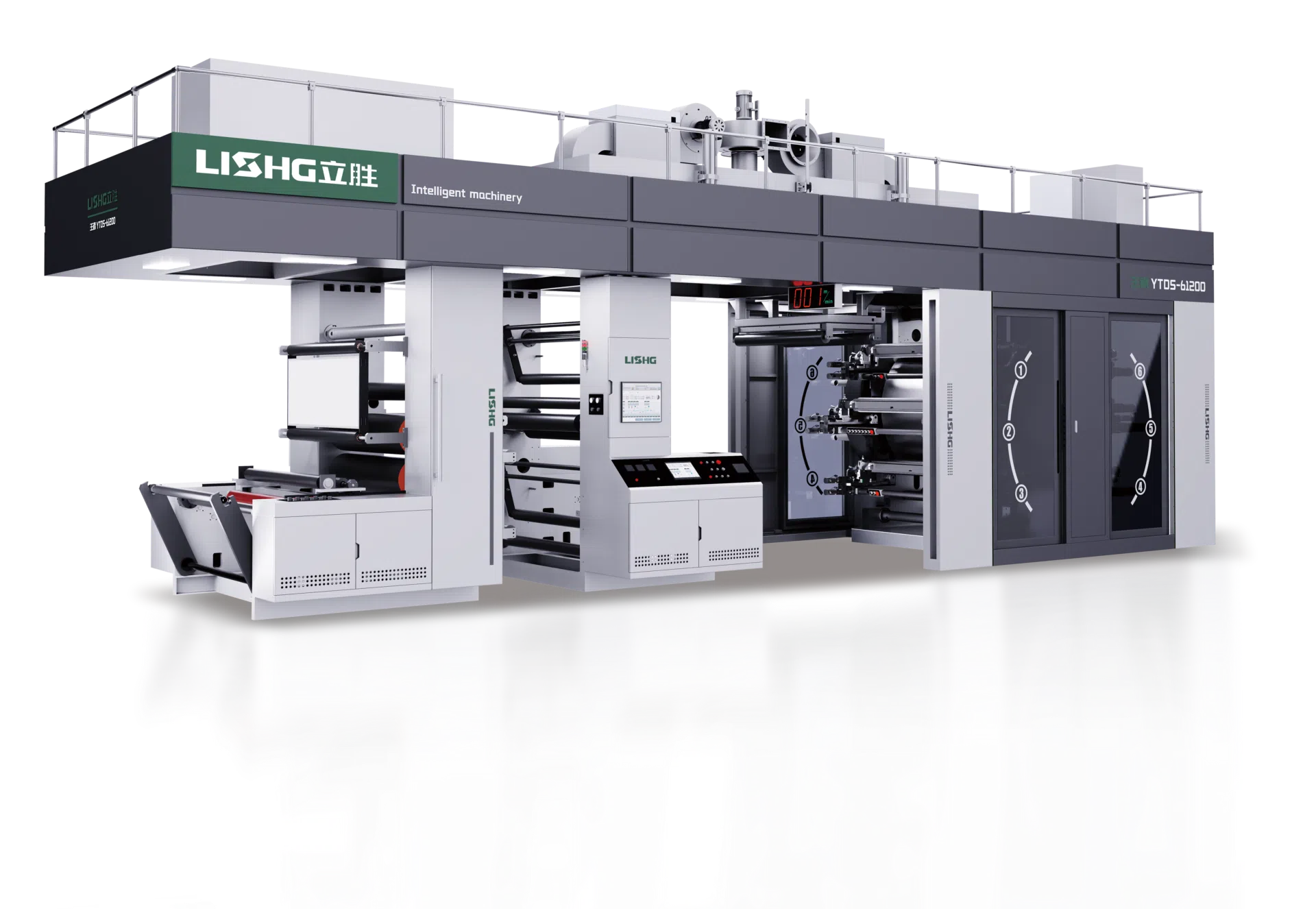
CI Flexo Component Visuals
These visuals show what a central impression press looks like in practice — architecture, print result on film, and a film-ready press platform.
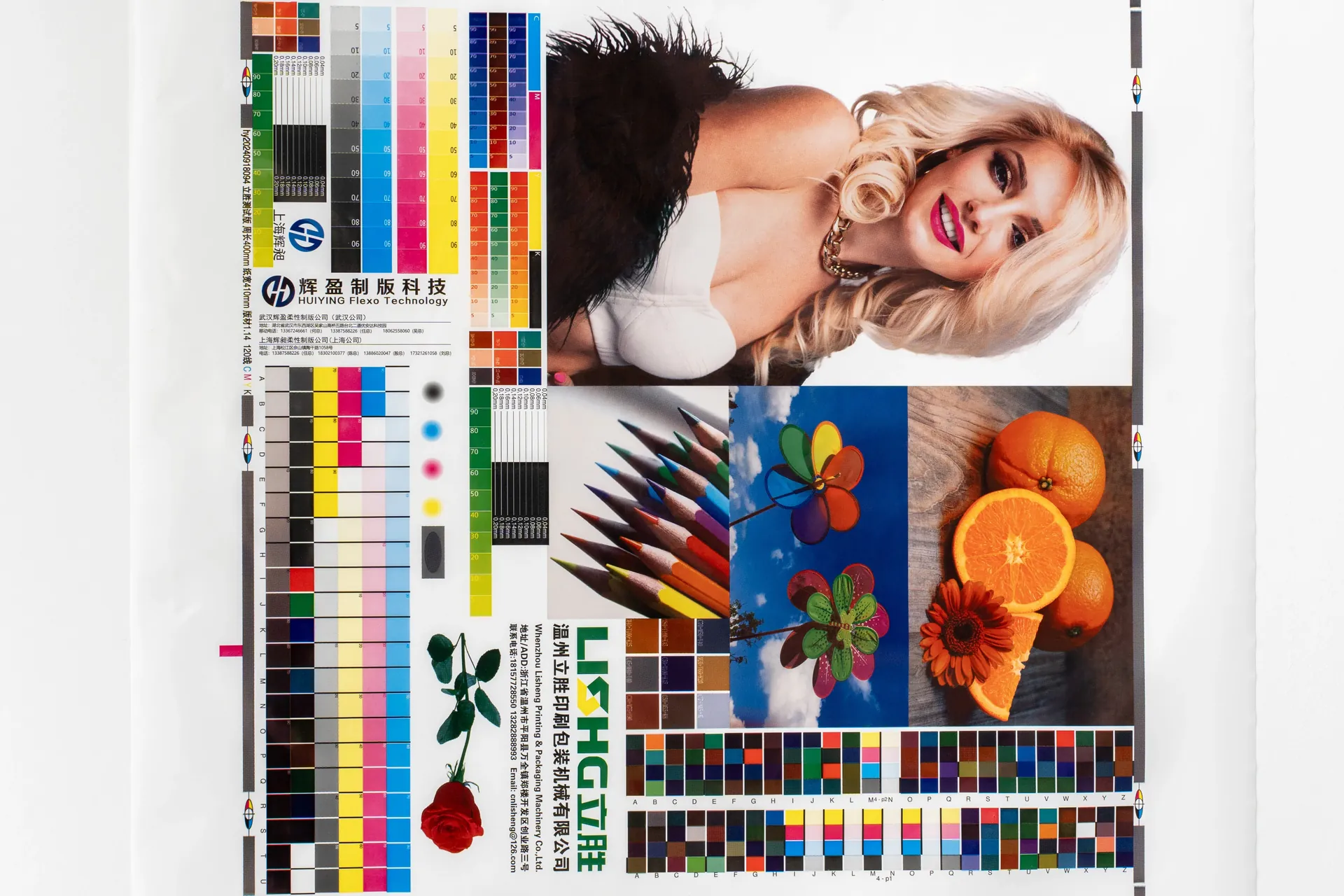
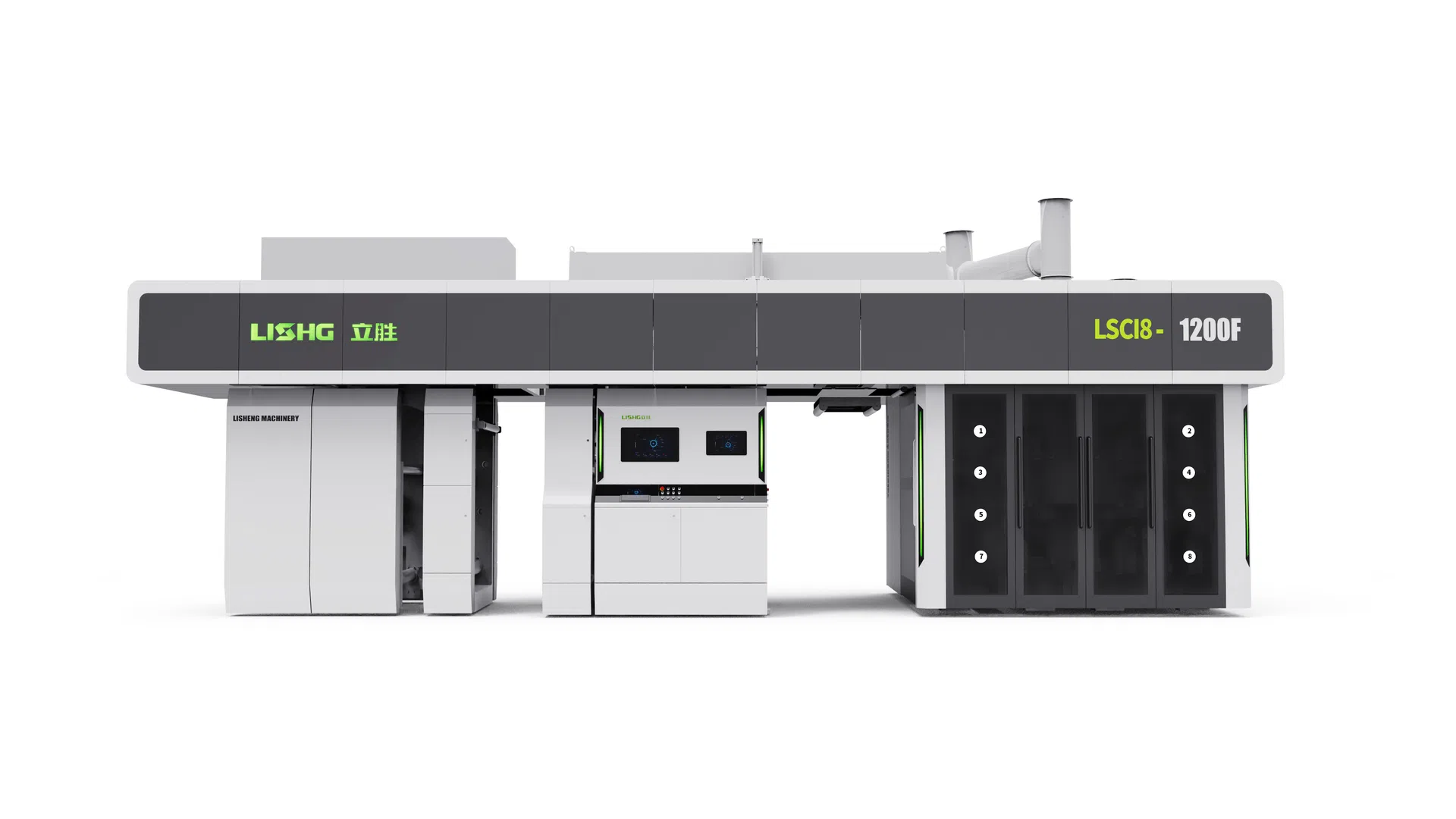
CI Flexo Printing Machine FAQ
What is the difference between CI flexo and stack flexo?
CI flexo prints around one central impression cylinder that continuously supports the web — generally stronger for thin-film register. Stack flexo stacks units vertically with less continuous support between stations and can suit simpler or mixed jobs. Detail: CI vs stack vs rotogravure · CI vs Stack guide.
What is the difference between CI flexo and gravure / rotogravure?
CI flexo uses flexographic plates and typically lower tooling cost with faster changeovers — favored for mixed SKUs and medium runs. Gravure (rotogravure) uses engraved cylinders and often wins on ultra-long stable SKUs. Neither is universally cheaper; compare tooling, run length and changeover on your mix. See architecture compare · price guide.
What is the difference between CI flexo and inline flexo?
CI flexo groups color stations around one drum for film register. Inline flexo arranges units in a line — common for labels, cartons or processes combined with other converting steps. Choose by substrate, register need and line layout. Guide: CI vs Inline.
How many colors does a CI flexo press have?
Common flexible-packaging configs are 4, 6, 8 and 10+ colors. Count separations on the worst SKU — process + limited spots often fit 6; white/varnish/extra spots push 8/10. Decision guide: 6 vs 8 how to choose.
What substrate is best for CI flexo?
CI flexo is widely used on flexible packaging films — PE, BOPP, PET, CPP — and can be configured for paper. “Best” depends on tension, drying and ink for the job, not a single universal film. See materials.
How fast is a CI flexo printing machine?
Buy usable production speed, not brochure max. Manufacturer platform envelopes (LISHG): Ultra ≈150–200; Apex ≤250; King ≤350; Master ≤500 m/min. Film · 1000–1300 mm · 350 m/min → King. Drying, tension and register usually set a lower everyday window. See mechanical vs usable speed.
How much does a CI flexo printing machine cost?
There is no universal list price. Each press is configured by substrate, width, colors, speed, drive, drying and register automation. LISHG provides configuration-based quotations. Full guide: CI flexo printing machine price · soft summary: cost.
What affects CI flexo machine cost?
Width, colors, speed class, drive (Gear < Servo < Gearless), drying, register automation, sleeves, installation, training and spare parts. Higher width and more stations raise CapEx; automation can raise CapEx while lowering waste OpEx. Full table: price & cost factors.
How do I choose a CI flexo printing machine?
Follow Steps 1–8: substrate → width → colors → usable speed → drive → ink → automation → RFQ. Lock production requirements before comparing stickers. See how to choose.
Is CI flexo suitable for flexible packaging?
Yes — CI flexo is a primary process for flexible packaging films (PE, BOPP, PET, CPP) when multi-color register and usable speed matter. Confirm drying, tension and ink for your structure. See applications · flexible packaging guide.
How do I evaluate a CI flexo machine manufacturer?
Compare engineering capability, custom configuration, substrate experience, register system, drying technology, FAT, installation, operator training, spare parts, after-sales service and export experience — not ads alone. Checklist: Choosing a CI Flexo Printing Machine Manufacturer.
Related Guides (Hub → Spoke Map)
This page is the CI flexo buying-guide pillar. Soft price summary lives here; transactional price depth, 6-vs-8 decision depth, beginner definition and architecture/application spokes live on dedicated URLs. Color/width/speed product intents go to product pages.
| Intent | Destination | Role |
|---|---|---|
| Beginner definition | Beginner’s complete guide | Informational spoke |
| Price / cost / how much | CI Flexo Printing Machine Price · soft summary #cost | Price spoke |
| 6 color vs 8 color | 6 vs 8 how to choose · products: 6-color · 8-color | Decision spoke + products |
| CI vs stack / inline | CI vs Stack · CI vs Inline · on-page compare | Comparison spokes |
| Flexible packaging / film | Flexible packaging · Film | Application spokes |
| How to choose / mistakes / lessons | How to choose · Mistakes · Lessons · Case | On this pillar |
| RFQ / quote | RFQ · Price-page RFQ · Flexo quote | Commercial CTA |
Request Configuration & Quotation
This page is the CI flexo printing machine buying-guide pillar. Soft cost summary lives here; hard price depth is on CI Flexo Printing Machine Price. Supporting guides — beginner overview, 6 vs 8 how to choose, CI vs stack and CI vs inline — support this pillar.
Ready for a configuration-based quotation?
Send substrate, width, colors, usable speed, ink and production requirements — full checklist on the price guide RFQ or short list at #rfq.
Request a CI Flexo Machine Configuration & Quotation
LISHG does not publish a universal list price. Quotes are configuration-based.
About LISHG Machinery
LISHG manufactures CI flexographic printing machines for flexible packaging and film converting. Founded 2005, Ruian, China. About
King Series
Based on your profile: Flexible packaging · Film, BOPP, PET, PE · 1000–1300mm · 350m/min
King Series is the strongest fit for Flexible packaging because Best fit when the plant runs high-speed film jobs and needs reliable register control, fast ramp-up, and strong production stability. At your target speed of 350m/min, this platform keeps register stable, startup waste low, and changeovers practical for repeat jobs.
You selected Film, BOPP, PET, PE. King Series is engineered for thin film, BOPP, PET, PE. Core substrate window: thin film, BOPP, PET, PE. This reduces tension surprises and ink-transfer issues on your primary material.
Width target 1000–1300mm and speed 350m/min sit inside the King Series envelope (1000-1300mm, 300m/min). Budget Mid to high range and High automation align with very high-automation workflows at this output level.
Key advantages: Servo gear precision; low startup waste; strong register at speed. Tradeoff to confirm: Higher initial investment than Master or Honor, and not the primary choice for FFS heavy-duty sacks. If your mix shifts toward ultra-thin film at 400–500 m/min, compare with another LISHG line before finalizing.