Flexo Press Uptime: Downtime Cost, Spare Parts, and Service Response
Short answer: uptime on a CI flexo press is decided by four losses - wear-part failure, web breaks, register and colour rework, and changeover overrun - and only the first two are really about the machine. What each loss costs you depends on your own stop log, not on a supplier brochure. This guide sets out the wear-part intervals to plan around, the spare-parts stock that keeps a press running, the three service-response models, and a downtime cost calculation you can fill with your own figures.
It is written for the person who already owns a press, or is about to sign for one, and has to answer a simple question at the monthly meeting: why did we print less than the plan. Most of that answer is not in the machine specification. It is in how the press is maintained, how fast a part arrives, and whether the fault is one that a technician can talk you through on a video call at 9 pm or one that needs a flight.
1. Why uptime, not nameplate speed, sets cost per 1,000 m
Press comparisons usually end at the speed column, and the fastest number wins the meeting. That number describes one minute of perfect running. It says nothing about the other minutes. Do the multiplication on two machines and the gap closes fast:
A press rated at 350 m/min that is available 60% of scheduled hours delivers roughly the same metres per month as a press rated at 250 m/min that is available 84% of the time. 350 x 0.60 = 210 effective metres per minute; 250 x 0.84 = 210. Nothing is wrong with the faster machine. It is simply stopped more often, and stopped time never appears in the quotation.
Three terms make this measurable, and they are worth agreeing on before you argue about performance:
MTBF (mean time between failures): running hours per failure. It describes how healthy the press is.
MTTR (mean time to repair): clock hours from stop to good saleable output, including diagnosis, part arrival and restart scrap. It describes how quickly you recover.
Availability = MTBF / (MTBF + MTTR). A press that fails once per 40 running hours and takes 4 hours to recover runs at about 91% availability; the same press with a 12-hour recovery, because the part came from overseas, runs at about 77%.
That 14-point difference is not an engineering problem. It is a logistics and readiness problem, and it is the one buyers rarely price before signing. When you compare presses, ask four questions of each supplier: what availability they are prepared to write into the contract, the MTTR they expect for the five most common failures on that model, the lead time for wear parts and for a cylinder or sleeve, and what can be handled remotely.
Cost per 1,000 m follows from the same arithmetic. Take your monthly fixed cost of owning the press - depreciation, floor space, crew, energy base load - and divide it by the metres actually shipped. Raising output by recovering stopped hours spreads the same fixed cost over more metres; raising top speed only helps if the press is already available when you need it.
2. The four losses that stop a CI press
"Downtime" as a single number hides where the hours go. Split it into four categories plus rework, and the stop log starts telling you what to fix. The table below is the classification we use when reviewing a converter's press records, together with the trap that makes each category easy to mis-attribute.
Loss | What it looks like on the floor | Commonly mistaken for | First measurement |
|---|---|---|---|
Breakdown | Bearing seizure, doctor blade breakage, dryer element failure, sensor drift, drive fault | "Bad machine" - when the real cause is an overdue inspection interval | Fault code plus the part that was replaced |
Changeover | Plate and sleeve change, anilox swap, ink and colour change, register re-setting at job start | "Normal setup time" - so nobody sets a target for it | Minutes from last good sheet of job A to first good sheet of job B |
Minor stops | Web break restart, splice, register re-correction, ink viscosity adjustment, blocking at the outfeed | "Nothing, it was only a few minutes" - the largest invisible block | Every stop over two minutes, even when it is fixed at the panel |
Speed loss | Running below rated speed because drying is marginal, tension is hunting or register drifts at higher speed | "We are just being careful" | Actual m/min logged hourly against the job standard |
Rework | Register or colour outside tolerance, streaks from a worn blade, waste at restart | "Waste", which is booked separately and never joined to availability | Metres scrapped per job, with the reason code attached |
The practical step is modest: for two weeks, log every stop longer than two minutes with a reason code from a fixed list of twelve, the part or station involved, and the time the press came back to good output. Do not change anything else during those two weeks. The log will almost always show two or three codes carrying most of the lost hours, and usually one of them is a wear item you already knew about and had been tolerating.
Two attribution traps are worth flagging. First, a stop caused by a worn doctor blade gets booked as a quality problem, because the visible symptom is streaks; the lost hours then sit in the waste column and never get compared with the cost of the blade. Second, changeover overrun is often blamed on the crew, when the actual constraint is that the job list gives no time for plate washing and the anilox is changed twice a week for colours that could share a chamber.
3. Wear parts: what fails first and on what interval
A wear part is an item whose function degrades with running hours and whose condition can be measured before it fails. That definition separates it from three neighbours that get mixed into the same budget line: consumables (ink, solvent, tape, cleaning cloth), wear parts (blades, anilox, seals, load cells, sensors, bearings), and long-lead assemblies (cylinders, sleeves, gears, dryer modules, drive units). The three need different stock policies, and confusing them is how a plant ends up with a cupboard full of solvent and no spare blade on a Saturday.
What fails first on a CI press
The order is fairly stable across gearless and gear-driven machines, because the failure sequence follows the ink path and the web path rather than the drive architecture. Along the ink path, the doctor blade goes first, then the anilox, then chamber seals and the ink pump. Along the web path, plate and sleeve damage shows up early, then tension rollers and load cells, then web guide and slitting knives if the press is inline. Around the drum, the items with the longest recovery time are bearings and cylinders, not because they fail often but because nobody stocks them.
Item | Early signal | Condition check | Replace or act when |
|---|---|---|---|
Doctor blade | Streaks, chatter marks, uneven ink lay | Visual and blade-edge check every shift; blade angle and pressure checked weekly | Streaking survives a blade clean and a chamber flush |
Anilox roll | Fading solids, mottling, rising ink viscosity to compensate | Cell volume and cleanliness check monthly; engraving inspection quarterly | Volume loss confirmed by measurement, or score lines that survive cleaning |
Chamber seals and end seals | Ink leakage at the chamber, pressure instability | Weekly | Leak returns after seal replacement or chamber rebuild |
Plate and sleeve | Register shift, dot gain change, plate damage after a web break | Before every job and after every web break | Repeat length or mounting error outside job tolerance |
Cylinder and impression bearings | Vibration, register drift at speed, temperature rise | Vibration reading and grease condition monthly | Trend exceeds the band you set at commissioning |
Gears (gear-driven presses) | Banding, backlash noise, register variation at low speed | Backlash and oil condition quarterly | Banding that cannot be corrected by tension or register adjustment |
Dryer elements and thermocouples | Marginal drying, speed ceiling below rated, colour variation between lanes | Element resistance and airflow every quarter; before peak season | Drying no longer supports the job's rated speed |
Tension load cells and dancers | Tension hunting, register drift after splice, web wander | Calibration check quarterly | Drift outside the calibration tolerance you accepted at FAT |
Register mark sensor | Phantom stops, "no mark" alarms, corrections that overshoot | Lens clean weekly, alignment monthly | Repeatable detection fails on a known-good job |
Web guide and slitting knives | Edge misalignment, ragged trim, poor cut on inline slitting | Weekly for knives, monthly for guide response | Trim quality falls outside customer tolerance |
The two items that decide print quality before they stop the press
The doctor blade and the anilox rarely fail suddenly. They degrade, and the operator compensates - more impression, more ink, a slower speed - until the compensation runs out at a speed the customer's job cannot accept. That is why a blade that "still works" can be costing several hours a week in speed loss and rework that never appear as a stop. If you only track one quality item, track the blade: it is cheap, it is in stock, and its condition is visible on the first print of every shift.
Long-lead items are a planning problem, not a repair problem
Bearings for a CI drum, a replacement cylinder, a damaged sleeve or a drive module can sit outside your control for weeks. Two decisions reduce the exposure without buying anything: keep a documented measurement baseline from commissioning (bearing vibration, cylinder outside diameter, sleeve repeat length) so a replacement can be specified from records rather than from a site visit, and agree with the supplier, in writing, which assemblies are stocked and which are made to order.
4. Spare parts kit: what to stock in the first 24 months
Stock decisions follow one rule, and it is not "stock everything that might break". Stock the items where lead time, failure probability and line-stop impact multiply badly: a part that arrives in three days and stops the press for a shift belongs on your shelf; a part that arrives in two days and costs an hour belongs on the supplier's. Applied across a CI press, that rule produces three tiers rather than one long list.
Tier | What belongs here | Cover to hold | Decision rule |
|---|---|---|---|
1. Consumables and fast movers | Doctor blades, chamber and end seals, cleaning solvent, filters, sensor lenses, tape, gaskets | Cover for one normal production month, reordered at 30% remaining | Cheap, fails often, stops the press within a shift |
2. Critical wear parts | One spare blade set per press, one set of chamber seals, register sensor, load cell, thermocouple pair, ink pump diaphragm, dryer element | One piece each, replaced when the spare is used | Stops the line, arrives in days-to-weeks, cost is moderate |
3. Long-lead assemblies | Bearing set for one CI drum, one sleeve in the most-used repeat, drive module, anilox in the dominant volume | Shared, consigned, or covered by a written lead time | High cost and long lead time - decide per machine, not per plant |
What not to stock
Three categories commonly go wrong. A full anilox inventory for every colour and coating is working capital sitting on a shelf, when two or three volumes plus a cleaning discipline cover most jobs. A complete gear set invites a rebuild nobody on site is trained to do. A spare dryer module is usually a shared asset across the plant rather than a per-press purchase. If you run several presses of one series, the tier-3 list is where sharing pays; the tier-1 list is where sharing breaks down, because Saturday evening is exactly when two presses want the last blade.
A kit is only useful if it can be found. Label by machine serial and by fault code, not by item name; a shelf marked "seals" is a shelf where the end seal you need is behind four seals you do not. The same discipline applies to expiry-sensitive items: solvent, adhesives and some elastomer seals age, and a five-year-old seal is a leak waiting for a busy week.
5. Service response: remote, regional, or fly-in technician
Service is sold as a promise and delivered as a route. Three routes cover almost every installed press, and they differ less in skill than in the clock. A remote session can start within an hour of a call; a regional technician means a flight and a hotel; a factory technician means a visa, a longer flight, and a schedule that depends on both. Choosing the route is therefore a question about which faults you expect, not about which supplier sounds more responsive.
Route | What it can do | Typical structure | Where it fails |
|---|---|---|---|
Remote diagnostics | Read fault logs, watch a running press over video, adjust parameters, re-teach a sensor, verify a register or tension setting, guide a mechanical swap the crew can perform | Acknowledged the same working day; session scheduled with the plant's own technician holding the phone | Anything needing a tool on the drivetrain, chamber, cylinder or sleeve |
Regional technician | Same scope as remote, plus mechanical inspection, alignment, bearing replacement, chamber rebuild | Coverage area with a stated response window, travel charged per intervention or covered by a retainer | Regions where no partner is genuinely staffed; peak seasons when the partner is booked |
Factory technician | Full scope, including commissioning-level work and operator retraining | Per-visit quotation with travel days, visa processing and a defined working-day count on site | Urgency: documentation and visa lead time set the floor, not the supplier's willingness |
What to write into the service agreement
Five lines do most of the work, and they are worth more than a page of adjectives. Acknowledge within a stated number of working hours. Offer a remote session within a stated number of working hours for faults that qualify. State the on-site target in working days after the fault is confirmed as mechanical, with the visa process named as the buyer's or supplier's responsibility. List which wear parts are held ex-stock and which are made to order. Name the faults excluded from remote support, so nobody discovers the exclusion at 11 pm.
Two realities deserve a line in the contract rather than a conversation later. For markets where a visa takes weeks, an on-site promise in days is not a promise anyone can keep; the plan should lean on remote scope and a local stock of tier-2 parts instead. And for a single-press plant, the most useful clause is often not response time but a scheduled annual visit, because a planned intervention costs a fraction of an emergency one and catches the wear that would have caused the emergency.
6. What one hour of downtime costs your plant
Two plants with identical presses can have very different costs per stopped hour, and the difference is commercial rather than technical. If you are demand-constrained - orders waiting, penalties on late delivery - a stopped hour costs contribution margin you cannot recover, and the number is large. If you are building stock ahead of a season, a stopped hour mostly costs absorbed overhead, and the number is smaller. Neither plant is wrong; they simply should not use the same number in a business case.
The calculation has six inputs, and five of them are already in your accounts:
Contribution margin per hour of good output, if the hour cannot be recovered (demand-constrained case), or the absorbed fixed cost per hour if it can.
Crew cost during the stop, including anyone called in at overtime rates.
Restart scrap: metres lost from stop to first saleable output, priced at material plus conversion.
Energy and utilities at idle, which are smaller than most people assume but real.
Late-delivery penalties or expedite freight, if the stop pushes a shipment.
Recovery cost: technician time, travel, and any premium paid for a part that had to be flown in.
Input | Example value | Where the number comes from |
|---|---|---|
Rated output | 300 m/min x 60 = 18,000 m/h at 1,300 mm web | Press specification |
Contribution margin per metre | USD 0.05 | Your job costing, after material and variable conversion |
Margin lost per hour | 18,000 x 0.05 = USD 900 | Calculated, demand-constrained case only |
Crew during the stop | 4 people x USD 10/h = USD 40 | Payroll, fully loaded |
Restart scrap | 250 m x USD 0.07 = USD 17.5 | Your measured restart waste |
Utilities at idle | USD 20 | Metered, or estimated from connected load |
Cost of one stopped hour | approx. USD 960, or approx. USD 60 if the hour can be recovered | Sum of the lines above |
The same table explains why a spare-parts kit is usually cheap. If an unrecovered hour costs about USD 960 in this example, a tier-2 kit that prevents four hours of waiting is worth roughly a week of that press's output, and it is paid for once. The error to avoid is comparing the kit price with the price of the part it replaces, rather than with the hours the part would have stopped.
Run the model on your own data before you approve anything. A plant that prints long runs for stock will find a small number and should buy less stock; a plant with short runs and delivery penalties will find a large one and should buy more. The point of the model is not the total. It is that the priority order inside your kit comes out of the arithmetic instead of out of habit.
7. The 12-month maintenance calendar
The calendar is a capacity plan, not a task list. Get that wrong and it becomes a document nobody opens after March. What matters at planning level is that the press has four shutdown windows in the year, that each window has a defined scope and a named owner, and that the work inside them is sequenced so a dried-up dryer element or a bearing swap does not land in the middle of your busiest month.
Three patterns are worth building into the calendar explicitly. The dryer check belongs before the season in which the press runs hardest, not after it. Gearbox oil and greasing intervals follow running hours, not months, so the calendar should carry an hours counter rather than a date. And the spares reorder point belongs in the same document as the inspection, because the moment you decide a blade needs replacing is the moment you should also check the shelf.
The detailed schedule - daily, weekly, monthly, quarterly and annual tasks with time allowances per item - is published separately in our CI press maintenance schedule. Use that page for the task content and this section for the planning frame: windows, owners, and the two dates that get missed.
8. How LISHG supports installed presses
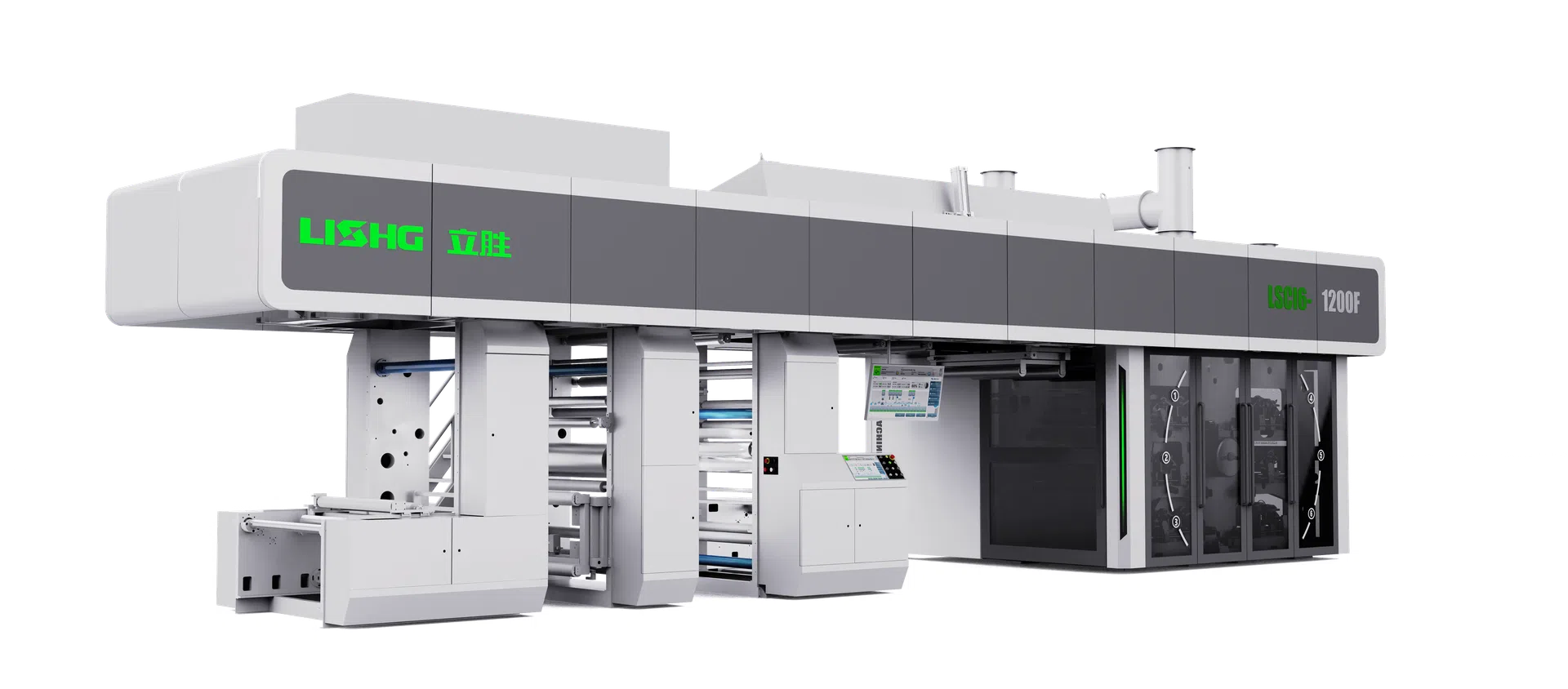
LISHG builds CI flexo presses across the Master full-servo gearless platform and the King servo gear-driven series, and support follows the same two paths for both: parts and people. On the parts side, each machine series carries its own wear-parts list keyed to the machine serial, so a request can be matched to the exact configuration that was shipped rather than to a generic model name. On the people side, remote sessions are used first where the fault allows it, and site visits are quoted with the working days and travel included.
Two things we deliberately do not promise in writing on a web page. Response times differ by market, because the constraint is usually travel and documentation rather than willingness, so the terms that apply to your country are the ones in your supply agreement. And an installed press changes over time - sleeves are replaced, anilox volumes are swapped, a dryer module is rebuilt - which is why we ask for the serial and the current configuration before quoting parts.
What we can confirm here is scope, not service levels: wear parts and assemblies for the series we build, commissioning and operator training as part of delivery, and a remote route for faults that can be diagnosed without a tool on the drivetrain. Everything with a number attached to it belongs in the contract, and we would rather write it there than imply it on a page.
9. What to send us for a service and spares plan
Three pieces of information turn a general question into a specific answer. The machine model and serial, so the parts list matches what was shipped. Annual output by substrate, so the wear intervals are scaled to your running hours rather than to an average. And the last eight weeks of stop records with reason codes, even handwritten, because that is what shows whether your first purchase should be blades, a load cell, or a bearing set.
If you do not have the stop records yet, send the other two and start the log this week; two weeks of honest entries is enough to rank the first three actions. The cost model in section 6 can be filled with your own figures at the same time, and the result usually settles the argument about what to stock faster than any supplier's recommendation.
Next step. Send the press model, your annual output and the current stop pattern, and we will return a spare-parts list and a service plan for that machine - not a catalogue page. Request the configuration and service review.
Questions we get asked about press uptime
How often should anilox rollers be cleaned and replaced?
Clean the anilox at every colour change and check cell volume monthly; replace on measured volume loss or on score lines that survive cleaning, not on a fixed calendar. Most plants replace an anilox because quality drifted, not because a date arrived.
Which spare parts should a converter stock locally?
Doctor blades, chamber and end seals, filters, a register sensor, a load cell and a thermocouple pair. These are cheap, fail without notice and stop the press for a shift. Bearings, cylinders and drive modules belong to a separate decision, made per machine and often shared.
What response time is reasonable for a press in the GCC?
Judge it on three clocks rather than one: acknowledgement within hours, remote session within one working day, and on-site within the visa and travel lead time for your country. A supplier promising on-site in two days to a market that needs a week of paperwork is promising what it cannot deliver.
Can register faults be fixed remotely?
Often yes. Sensor alignment, mark detection, correction parameters and tension set points can be checked over video with your operator holding the phone. A mechanical cause - a loose plate, a damaged sleeve, a worn bearing - needs a tool and a visit, and remote time is wasted trying to talk around it.
What voids a press warranty?
Usually non-original wear parts in critical positions, unauthorised modification of the drive or register system, skipped scheduled maintenance recorded nowhere, and operation outside the agreed substrate or speed range. Read the maintenance clause before you buy the first aftermarket blade, not after.
How long does a technician need on site?
For a diagnosed mechanical fault, one to three working days including strip-down and restart. For commissioning-level work or retraining, one to two weeks. Travel days are additional and usually fixed by flight schedules rather than by the job.
What does a service contract cost?
It is built from inspection days, travel, a parts allowance and the response commitment, so the number depends on where you are and what you want covered. A scheduled annual visit plus remote support is the cheapest structure for a single press; a multi-press plant usually pays less per machine for the same coverage.
How do I measure real uptime?
Pick a period, count running hours and count stop hours, and compute availability as MTBF divided by MTBF plus MTTR. Use good saleable output as the restart point, not the moment the press turns. Two weeks of honest logging beats a year of estimated percentages.