Flexible Packaging Buyer Guide
How to Choose a High-Performance Flexographic Printing Press for Flexible Packaging
When a flexible packaging converter starts evaluating a new flexographic printing press, the first comparison is often simple:
What is the maximum printing speed?
A modern high-end flexographic press, however, is much more than a machine with a high speed specification.

For demanding film and flexible packaging production, press performance depends on the interaction of architecture, web handling, servo drive, register, impression, inking, drying, vibration control, automation, inspection, changeover and lifecycle support.
This is why leading European manufacturers such as BOBST, Windmöller & Hölscher and Comexi position high-performance presses around the complete production process rather than speed alone.
LISHG's MASTER Series is positioned as a full-servo gearless CI flexographic press for high-speed film and paper applications, with 4–10 colors and a stated maximum speed of 500 m/min.
Which press architecture and technology package can deliver the required print quality, production stability, changeover efficiency and operating economics for the actual job mix?
In This Guide
01 / Performance Definition
What Defines a High-Performance Flexographic Printing Press?
A high-performance flexographic press should be evaluated as a complete production system:
Print Quality
Register, dot reproduction, ink density, impression, color-to-color alignment and repeatability.
Production Speed
Maximum mechanical speed is only one reference. Actual speed depends on substrate, ink, coverage, width, repeat and drying.
Changeover Efficiency
Setup time and waste can outweigh brochure speed in real plant productivity.
Web Handling
Tension, tracking and mechanical stability directly affect film register and print quality.
Automation
Impression, register, pre-registration, job setup, inspection, reporting and diagnostics.
Reliability & Service
Design quality, spare parts, documentation, FAT, installation, training and remote support.
Swipe sideways to view the full table.
| Performance Dimension | What Buyers Should Verify | Why It Matters |
|---|---|---|
| Print quality | Register tolerance, sample consistency, long-run stability | Determines saleable output and customer acceptance |
| Speed | Realistic production rate for your substrate/ink mix | Brochure max speed is not plant output |
| Changeover | Plate/sleeve/anilox/ink change time and waste | Dominates multi-SKU economics |
| Drying | Installed capacity for coverage and water-based jobs | Often the hidden speed limit |
| Support | FAT protocol, spare parts, remote diagnostics | Protects uptime over machine life |
02 / Architecture
CI Flexo vs. Stack Flexo
Before comparing individual machines, buyers should understand the two main architectures.
On mobile, this comparison stacks by row for easier reading.
| Factor | Stack Flexo | CI Flexo |
|---|---|---|
| Unit arrangement | Printing units stacked vertically along the web path | Stations arranged around a central impression cylinder |
| Typical strengths | Flexible layout, double-sided printing, multi-substrate jobs | High-speed multi-color film, stable register, long runs |
| Best-fit jobs | Moderate speeds, frequent format variety, compact lines | High-quality flexible packaging graphics |
| LISHG platforms | HONOR Classic / Servo / Servo Sleeve | MASTER gearless CI; KING CI |
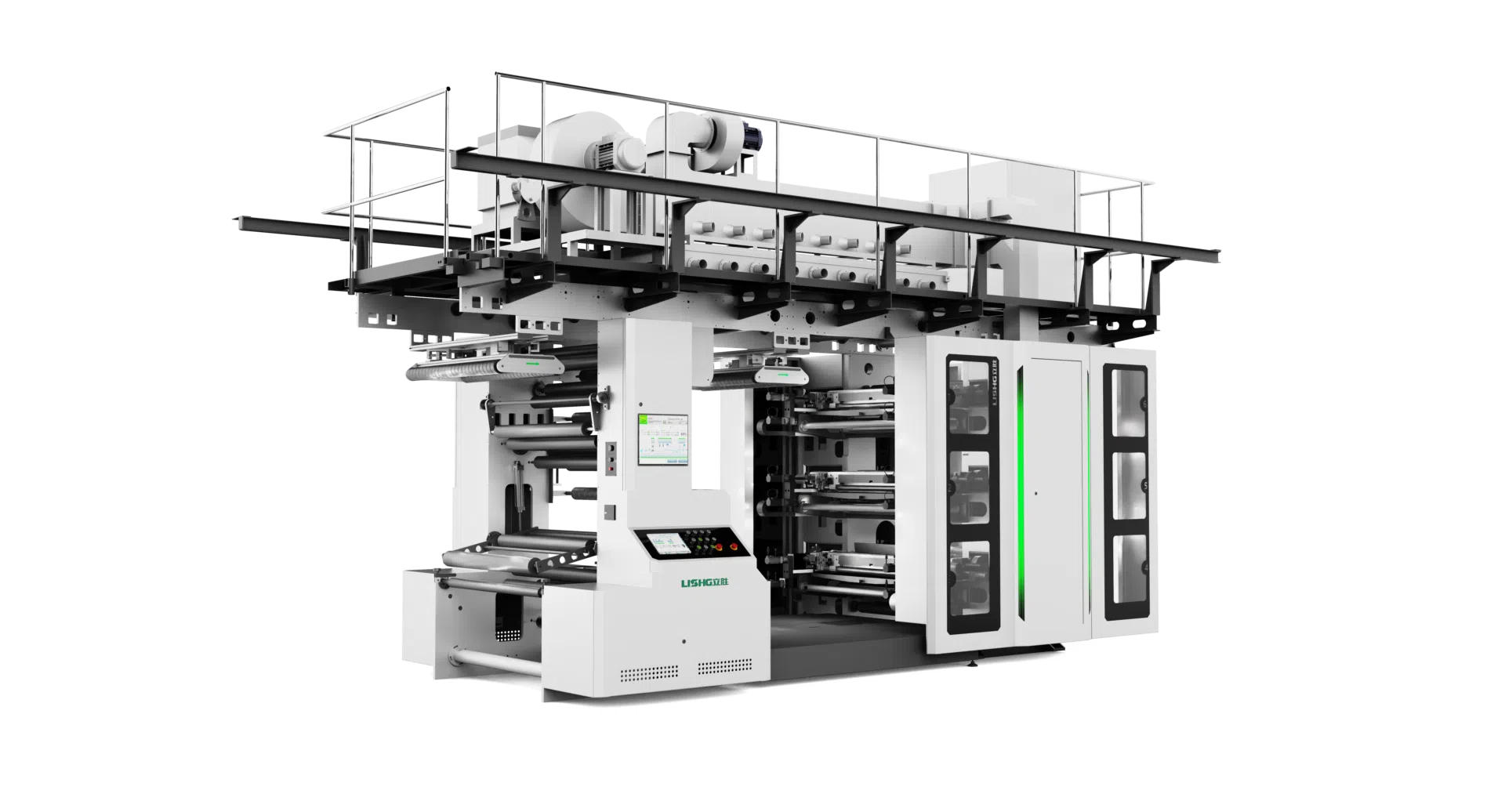
Stack architecture can be attractive for flexible configurations, double-sided printing, multiple substrates and compact layouts. See HONOR Stack Flexo for Classic, Servo and Servo Sleeve options covering film, paper, nonwoven and woven materials.
CI presses are particularly relevant for high production speed, multi-color film printing, stable register and long flexible-packaging runs. Compare LISHG CI Flexo Presses including MASTER and KING.
03 / Drive Technology
What Is Gearless Flexographic Printing?
Gearless technology replaces traditional mechanical transmission between printing units with independently controlled servo drives.
On mobile, this comparison stacks by row for easier reading.
| Topic | Gear-Driven | Gearless (Full Servo) |
|---|---|---|
| Synchronization | Mechanical transmission between stations | Electronic servo synchronization per unit |
| Typical benefits | Proven structure, often lower investment | High register accuracy, flexible repeats, automation headroom |
| Where it fits | General CI / Stack production profiles | High-volume, register-critical, high-speed film work |
| LISHG example | KING CI (gear/sleeve CI options) | MASTER full-servo gearless CI, up to 500 m/min |
Does the production profile justify the additional investment in a gearless architecture?
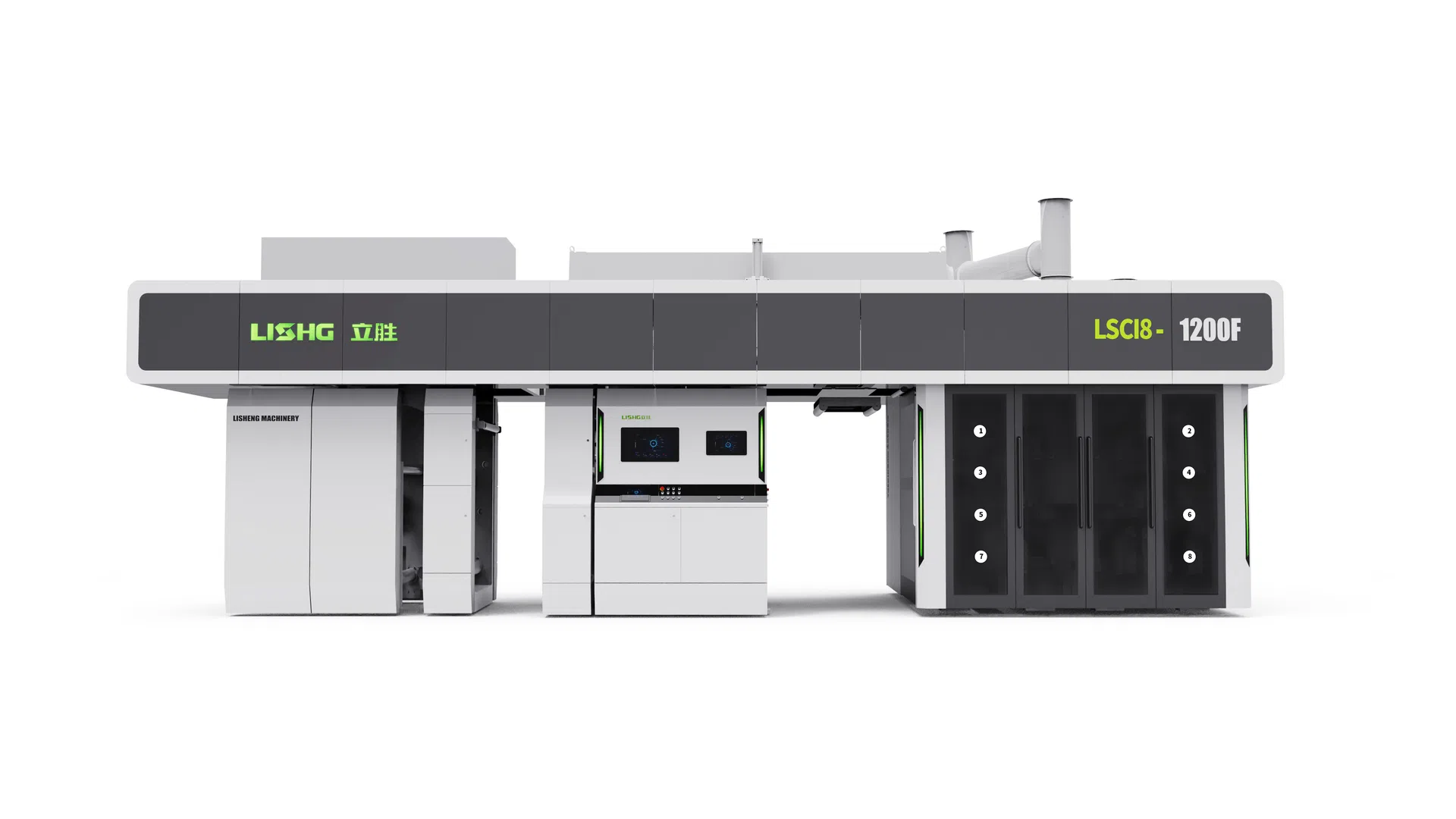
For high-volume, register-critical flexible packaging, evaluate MASTER full-servo gearless CI as the architecture match — not only the 500 m/min figure.
04 / Web Handling
Web Handling: The Foundation of Film Printing
High-speed flexographic printing begins with stable web handling. Thin, elastic film is sensitive to tension from:
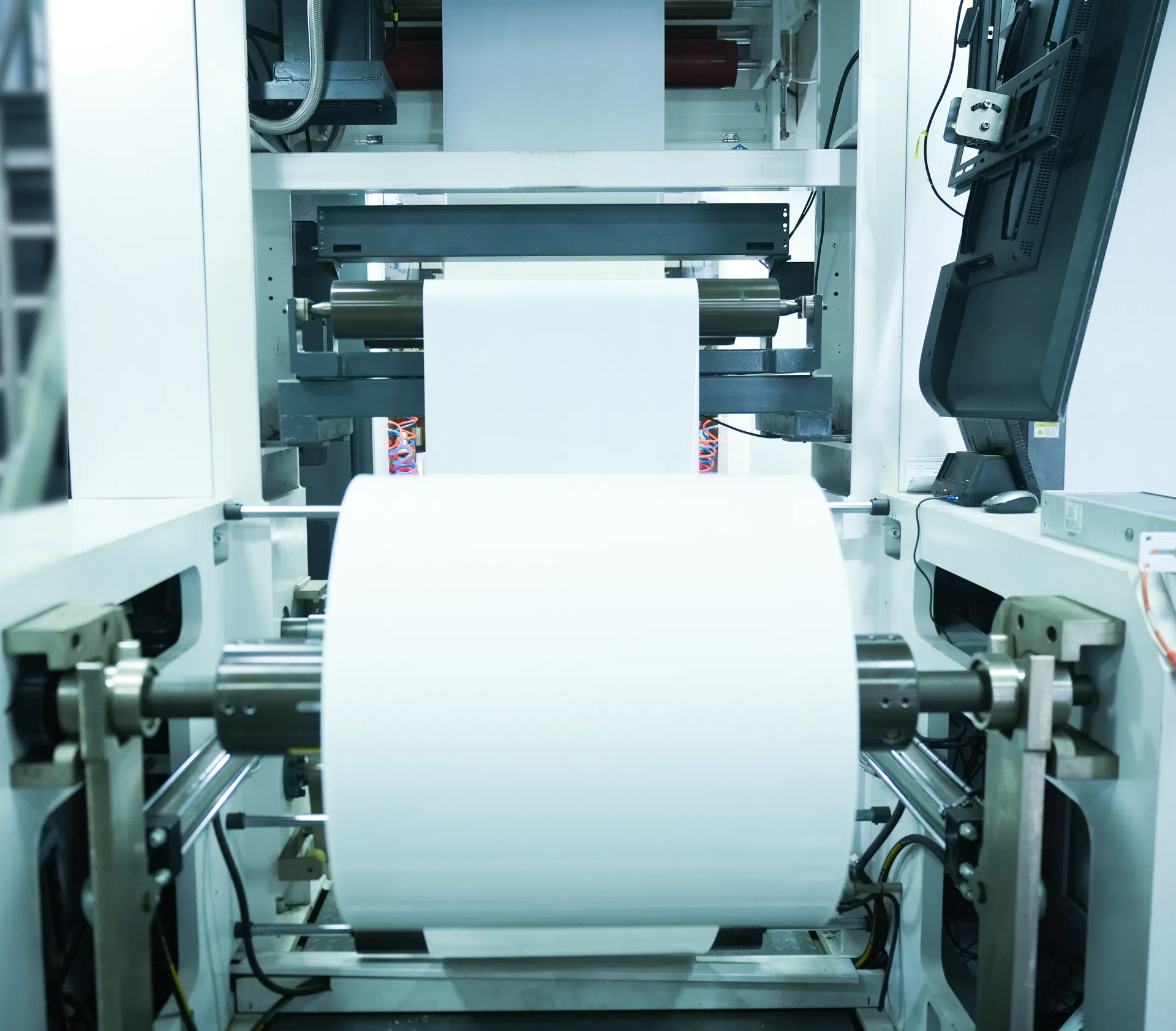
Important variables include web tension, guiding, roller alignment, nip pressure, tracking, vibration, acceleration and deceleration.
What web tension range and control strategy are used at the target production speed?
BOBST publishes web tension ranges for EXPERT CI (e.g. 20–350 N or 40–500 N depending on configuration). That type of specification is more useful than a speed figure alone.
05 / Register
Register Control
Register control is a defining technology of modern flexo presses. Small variations in tension, pressure, cylinder position, transmission, tracking and acceleration can shift color-to-color register.
Mechanical stability + servo control + sensors + software + operator interface
BOBST EXPERT CI, W&H MIRAFLEX II and Comexi F2 Evolution (Genius Print) all emphasize automated register/setup. Names differ; the objective is the same:
Reduce setup waste and maintain stable register throughout production.
06 / Impression
Printing Pressure and Impression Control
Too Much Pressure
Dot gain, slur, image distortion, plate wear, unstable quality.
Too Little Pressure
Incomplete transfer, uneven density, missing detail, poor consistency.
How much of the setup process can be automated and repeated from job to job?
This affects setup time, operator dependency and startup waste.
07 / Inking
Ink Metering and Chambered Doctor Blade Systems
A chambered doctor blade system controls ink transfer along:
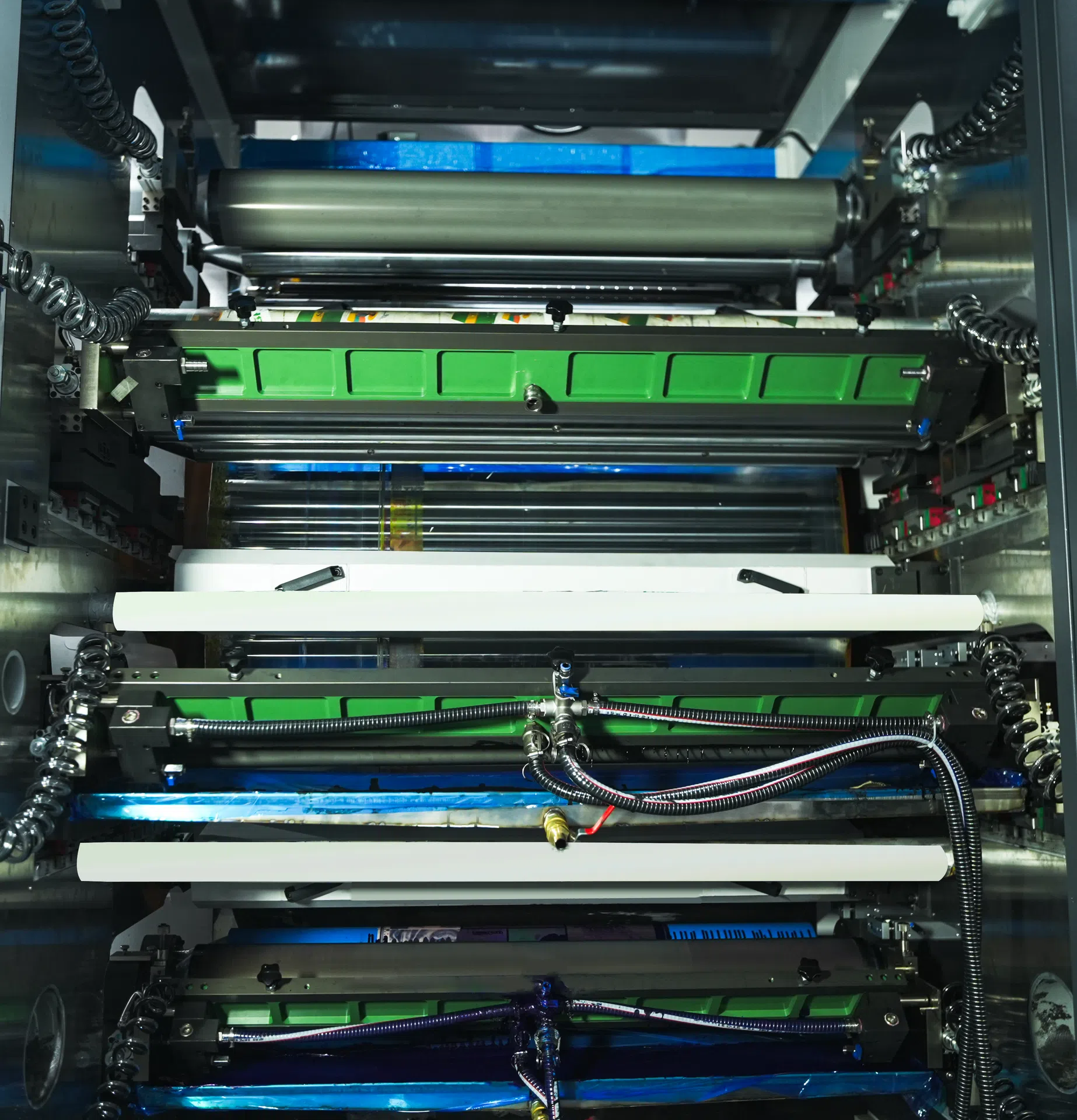
Evaluate anilox specification, viscosity control, chamber design, doctor blades, pumping, circulation, cleaning and changeover. At high speed, small transfer variations become more visible.
08 / Drying
Drying Capacity: The Hidden Limit of Production Speed
Higher speed + higher ink coverage = greater drying demand
Critical for water-based inks, dense solids, multi-color jobs, barrier/inline coatings and high-speed film.
Swipe sideways to view the full table.
| Manufacturer Focus | Published Direction | Buyer Takeaway |
|---|---|---|
| BOBST EXPERT CI | Modular drying for high coverage at high speed | Ask how drying scales with your coverage |
| W&H MIRAFLEX II | Drying as core productivity architecture | Treat drying as part of the speed claim |
| Comexi F2 Evolution | Genius Dry high-power configurable drying | Confirm water-based / high-coverage capability |
Never compare printing speed without comparing drying capacity.
09 / Mechanics
Vibration and Bounce Control
At high speed, vibration can cause bounce, slur, dot distortion, uneven impression and register instability. The press needs stiffness, cylinder support, roller design, drive sync and vibration control.
High-speed printing is a mechanical engineering problem as much as a software problem.
10 / Changeover
Automation and Changeover
Job changes may involve plates, sleeves, anilox, ink, pressure, register, width, repeat and dryer settings.
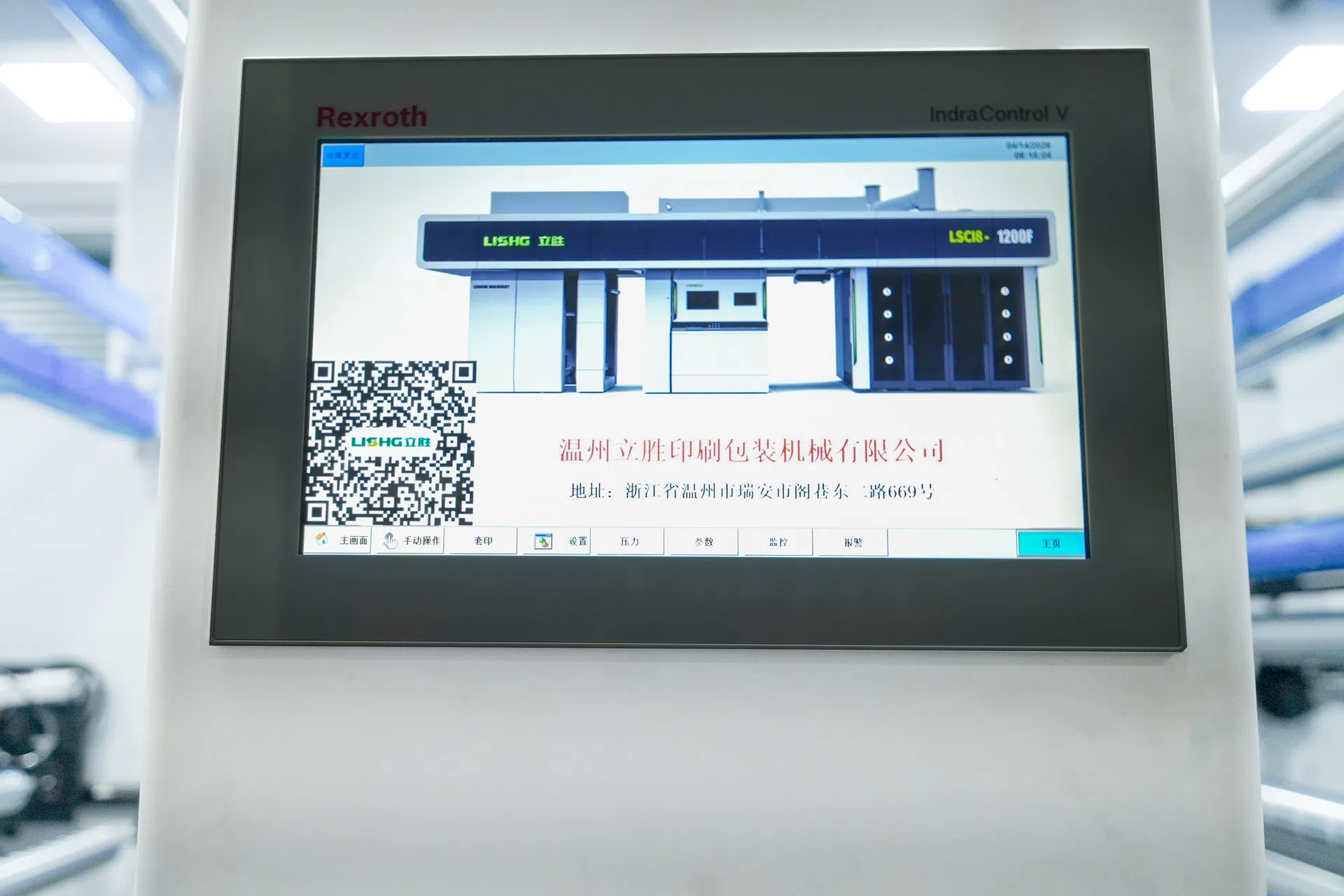
How much saleable production can the press generate per shift?
For frequent changeovers, evaluate sleeve platforms such as HONOR Servo Sleeve and automated setup on CI lines like MASTER.
11 / Quality
Inspection and Quality Control
At high speeds, visual inspection alone is insufficient. Web inspection helps catch missing print, spots, streaks, register errors, color variation, plate and substrate defects — especially for long runs, food packaging and strict customer standards.
12 / Output
Production Speed vs. Real Production Output
Effective Output = Running Speed × Availability × Quality × Production Time
Also evaluate startup waste, changeover time, average running speed, drying limits, cleaning, roll changes, operator intervention, downtime and inspection rejects.
On mobile, this comparison stacks by row for easier reading.
| Metric | Press A (Brochure-Led) | Press B (Stability-Led) |
|---|---|---|
| Max speed | 600 m/min | 500 m/min |
| Average production speed | 420 m/min | 430 m/min |
| Setup / waste | Long setup, higher startup waste | Short setup, lower startup waste |
| Operator load | Frequent intervention | More stable register, less intervention |
| Likely annual output | Not automatically higher | Often more saleable meters |
13 / Market Landscape
How Leading Manufacturers Approach High-Speed Printing
Published specifications illustrate industry direction — they are not a controlled head-to-head test.
Swipe sideways to view the full table.
| Manufacturer / Platform | Published Speed | Colors | Width Range | Technology Focus |
|---|---|---|---|---|
| BOBST EXPERT CI | Up to 600 m/min | 8–10 | 1100–1700 mm | Automation, register, drying, web handling |
| W&H MIRAFLEX II | Up to 600 m/min | 8–10 | 820–1450 mm | Productivity, drying, setup, inspection |
| Comexi F2 Evolution | Up to 600 m/min | 10 | 870–1470 mm | Drying, auto pressure/register, vibration |
| LISHG MASTER | Up to 500 m/min | 4–10 | Configuration-dependent | Full-servo gearless CI, high-speed film |
Market priorities converge on: speed + register + drying + web handling + automation + changeover + inspection.
14–16 / LISHG Portfolio
Where LISHG Fits — MASTER, KING and HONOR
LISHG covers Gearless CI, conventional/servo CI and Stack Flexo across MASTER, KING, APEX, ULTRA and HONOR families — so the press can follow the production profile.
Swipe sideways to view the full table.
| Production Profile | Typical Needs | Architecture to Evaluate |
|---|---|---|
| A — High-volume flexible packaging | PE/BOPP/PET, 8–10c, long runs, high speed & register | Gearless CI — MASTER |
| B — Multi-SKU / frequent changeovers | Film & paper, moderate speed, format variety | Servo Stack / Servo Sleeve — HONOR |
| C — General-purpose | Paper, nonwoven, woven, film, moderate speed | Classic/Servo Stack or KING CI |
LISHG Product Snapshot
MASTER Full Servo Gearless CI
Flagship gearless CI for high-speed film/paper: up to 500 m/min, 4–10 colors, independent servo drives for register-critical work.
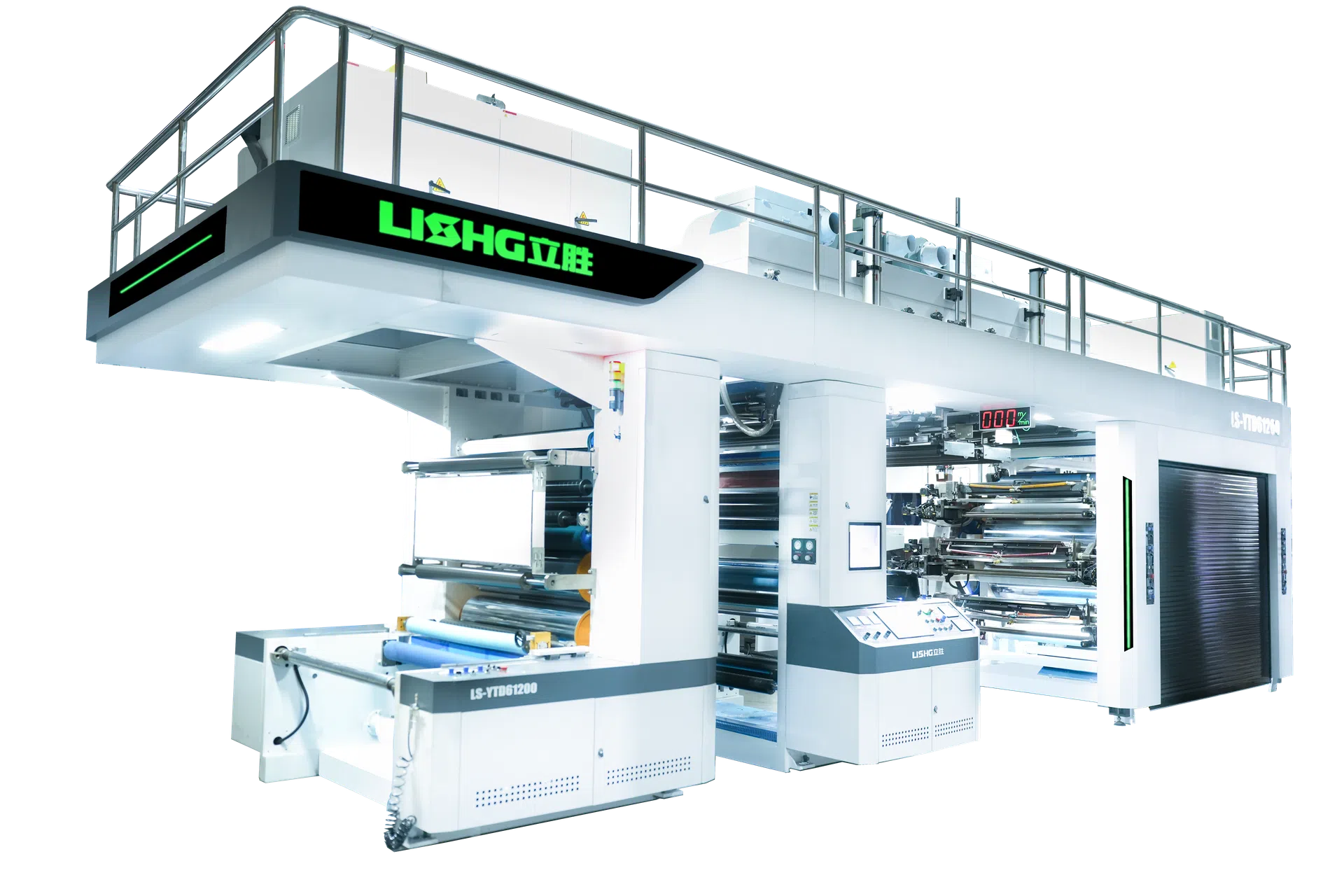
KING CI Flexo Press
CI platform for buyers balancing configuration, production requirements and investment — including sleeve-type changeover options for film.
HONOR Stack Flexo
Classic / Servo / Servo Sleeve for film, paper, nonwoven and woven bags when Stack architecture fits better than high-speed CI.
The most advanced machine is not necessarily the most appropriate machine.
17 / Technical Comparison
What Buyers Should Compare Between Manufacturers
Swipe sideways to view the full table.
| System | Check Items | Questions to Ask |
|---|---|---|
| Mechanical | Frame, CI drum, cylinders, rollers, bearings, vibration control | How is stiffness verified at target speed? |
| Drive | Gear / servo gear / gearless / independent servos | How are stations synchronized? |
| Register | Manual / auto / pre-register / closed-loop / monitoring | What waste is typical during startup? |
| Web handling | Unwind/rewind, tension, EPC, guiding, accel control | What tension range is published? |
| Ink & drying | Chamber, anilox, circulation, dryer capacity, WB capability | Can drying support my coverage at speed? |
| Changeover & QC | Sleeves, auto setup, inspection, recipes, diagnostics | How long is a representative job change? |
18 / Selection Logic
How to Select by Production Profile
Max high-speed production
Gearless CI + drying + register + web handling + automation — not speed alone.
Frequent job changes
Sleeve tech + automated setup + register + cleaning + operator workflow.
Double-sided printing
Stack architecture + web path + tension + register.
Flexible substrates
Web handling + drying + ink compatibility + treatment + register.
Long-term stability
Mechanical design + automation + inspection + service + spare parts + FAT.
19–20 / Evaluation
Speed vs Stability, and Why FAT Matters
The maximum-speed number does not tell you which machine produces more saleable meters over a year. Include FAT trials, sample production, job-change demos and production data whenever possible.
FAT should define measurable criteria: target/max speed, register, print quality, drying, web tension, changeover, auto register/impression, inspection, rewinding, alarms and safety.
Agree the FAT protocol in the commercial and technical specification before production. LISHG supports documented factory acceptance testing in Ruian.
21 / Manufacturing
Why Machine Manufacturing Capability Matters
Frames, cylinders, rollers, bearings, drives, machining, assembly and alignment affect long-term behavior.
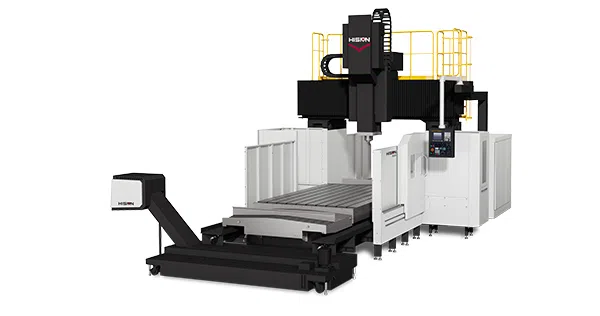
Gantry machining
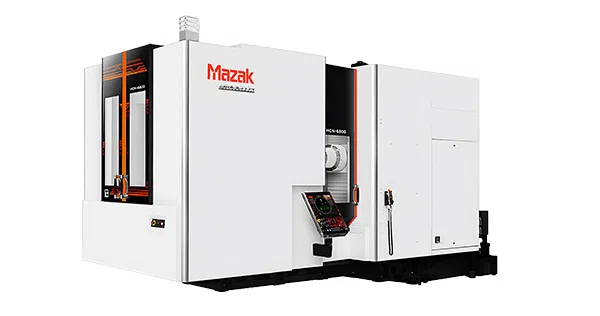
Mazak CNC
Factory & FAT
Which critical components are manufactured, machined and controlled in-house, and which are outsourced?
22 / Economics
Total Cost of Ownership
TCO = Machine Investment + Energy + Ink + Consumables + Waste + Labor + Maintenance + Downtime + Financing + Service
A higher investment may still win if it raises throughput, cuts waste/setup and increases saleable output for your real production model.
23 / Buyer Brief
Information to Prepare Before Requesting a Quotation
Substrate
PE, BOPP, PET, CPP, paper, laminated structures.
Material
Thickness, width, surface treatment, printing side.
Printing
Colors, repeat, coverage, register, ink system.
Production
Target/max speed, job length, jobs/shift, changeovers.
Downstream
Lamination, slitting, bag making, coating, barrier.
Quality
Color/register tolerance, inspection, customer specs.
24 / Industry Direction
The Future of High-Performance Flexographic Printing
Development is moving beyond mechanical speed alone toward mechanical precision + servo + automation + inspection + data + energy management + process integration.
The future high-performance flexo press is not simply a faster printing machine. It is a more automated and measurable production system.
25 / Buyer Checklist
Flexographic Printing Press Buyer Checklist
Before comparing quotations, confirm:
Architecture
- ☐ Stack
- ☐ Servo Stack
- ☐ Servo Sleeve
- ☐ CI
- ☐ Gearless CI
Printing
- ☐ 4 / 6 / 8 / 10 colors
- ☐ Repeat range
- ☐ Target register
Web & Register
- ☐ Unwind/rewind tension
- ☐ EPC / guiding
- ☐ Pre-/auto-/closed-loop register
Ink & Dry
- ☐ Chamber / anilox
- ☐ Solvent / water-based
- ☐ Drying capacity
Automation
- ☐ Auto setup
- ☐ Recipes / data
- ☐ Inspection
- ☐ Remote diagnostics
Acceptance
- ☐ FAT protocol
- ☐ Test substrate/ink
- ☐ Speed & quality criteria
- ☐ Changeover test
Final Takeaway
How Should You Choose a Flexographic Printing Press?
Do not select by one number — not maximum speed, color count, price or brand alone. Use a full technical and economic comparison.
CI + servo + register + web handling + drying + vibration control + automation + inspection
For high-changeover or double-sided work, Stack / Servo Sleeve (HONOR) may win. For register-critical high-volume film, gearless CI (MASTER) is the architecture to evaluate.
BOBST, W&H and Comexi show the 600 m/min-class direction. LISHG covers Stack, CI and full-servo gearless CI, with MASTER in the 500 m/min class.
Match substrate + thickness + width + colors + repeat + ink + speed + job mix + quality + downstream. Then request a technical proposal and, where possible, a representative FAT.
Next Step
Match Architecture to Your Production Profile
Share substrate, width, colors, target speed, job mix and quality standards. We can compare MASTER gearless CI, KING CI and HONOR Stack against your real workload.


