Gearless vs Gear-Driven Flexo Press: What Buyers Should Compare
When comparing a gearless flexo press with a gear-driven flexo press, the drive system is only one part of the decision. It affects how the printing units are synchronized, how register is controlled, how mechanical components are maintained, and how the press behaves as production speed increases.
A practical evaluation starts with the complete production profile: substrates, web width, printing width, color requirements, production target, register expectations, factory conditions and investment plan. This provides a basis for developing the press configuration instead of selecting a drive architecture from one specification alone.
Independent Servo Drive
Each printing unit is controlled independently through servo technology, reducing dependence on a common mechanical gear train.
Mechanical Transmission
Mechanical transmission remains part of the printing-unit drive system, combined with servo control on applicable platforms.
Start With the Production Work
The final machine configuration is developed around the customer's substrates, width, printing requirements, production target and operating conditions.
Web Width and Printing Width: Two Numbers Buyers Should Separate
Width is one of the first machine parameters to confirm, but material width and printing width are not necessarily the same number. The web width describes the material being handled through the press, while printing width refers to the usable area required for the printed job.
Width is configured around the customer's normal and maximum material width. Standard and customized width options are available across the flexo press series, and the final mechanical and printing configuration is developed according to the project.
01. Material or Web Width
This is the width of the substrate moving through the press. The normal working width and maximum material width are needed to understand web handling and the required machine configuration.
02. Printing Width
The printing width describes the actual area that needs to be printed. It should be reviewed together with the substrate width, print layout and product format rather than treated as the same value automatically.
03. Width and Drive Architecture
Width by itself does not decide whether a project needs gearless or gear-driven technology. It is reviewed together with speed, substrate behavior, color requirements, register expectations and production volume.
| Width Information | What to Confirm | Why It Matters |
|---|---|---|
| Normal material width | Main working width used in daily production | Helps define the practical working configuration |
| Maximum material width | Largest web width expected on the press | Determines the required web-handling and machine width capability |
| Required printing width | Actual printed area required for the main products | Helps match the press to the print layout and production format |
| Main production widths | Whether production is concentrated around one width or several widths | Helps assess the practical operating range of the proposed configuration |
What Actually Changes Inside the Press?
The practical difference between gearless and gear-driven construction starts with how the printing units receive and synchronize drive power. That difference becomes more important when speed, register, maintenance and the production conditions surrounding the press are considered.
Gearless Architecture
A gearless CI flexo press uses independent servo drives for the printing units. Without a mechanical gear train connecting the printing units, the control system can manage the rotational position of each unit electronically.
Gear-Driven Architecture
A gear-driven press uses mechanical transmission within the printing-unit drive system. On servo gear platforms, servo technology is combined with mechanical transmission to provide controlled and synchronized operation.
The Press Is More Than Its Drive
Drive architecture is only one part of the machine. Substrate behavior, web width, printing width, speed, color requirements, register demands and the complete web path all affect the final engineering decision.
| Comparison Point | Gearless | Gear-Driven |
|---|---|---|
| Drive transmission | Independent servo drive at the printing units | Mechanical transmission combined with applicable servo control |
| Register control | Electronic synchronization provides direct control of each printing unit | Register performance depends on the mechanical transmission, control system and complete press configuration |
| Mechanical transmission | No mechanical gear train between printing units | Mechanical gears remain part of the transmission architecture |
| Maintenance focus | Servo motors, drives, bearings, electrical systems and synchronization components | Gears, bearings, lubrication, mechanical transmission, servo components and control systems |
| Production application | Well suited to high-speed production where independent servo control is a key requirement | Suitable for high-volume production where servo-controlled mechanical transmission provides the required performance and investment balance |
Do Not Choose the Drive System From One Parameter
A wider press does not automatically require gearless technology, and a gear-driven press is not automatically limited to a particular color count or width. The complete production profile should be reviewed before determining the appropriate platform and configuration.
MASTER and KING: Two Different Drive Directions
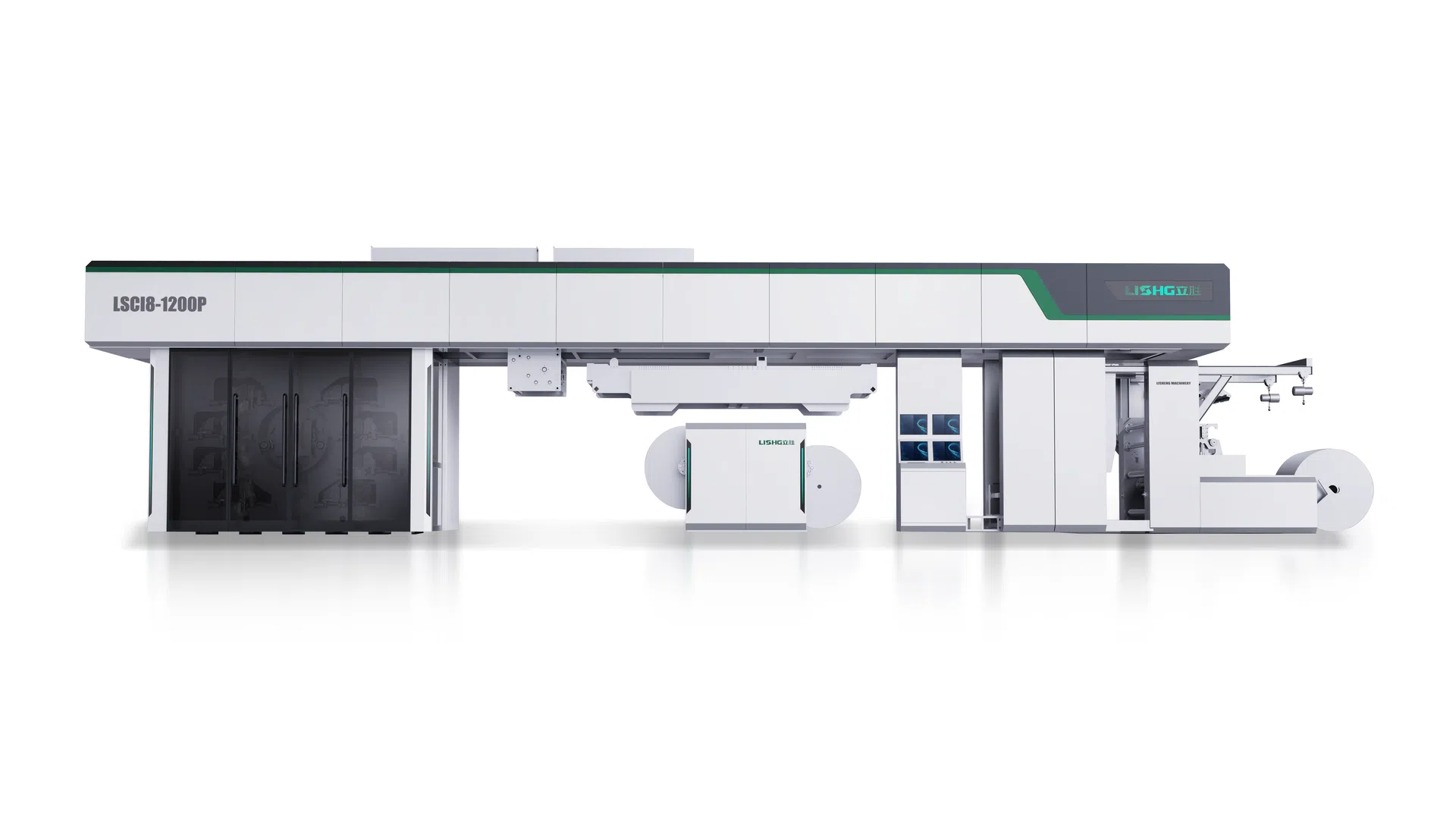
Within the CI flexo press range, CI flexo press platforms cover different production requirements. MASTER and KING provide a useful comparison because their drive architectures are different, while both can be developed around the customer's required width, color configuration and production profile.
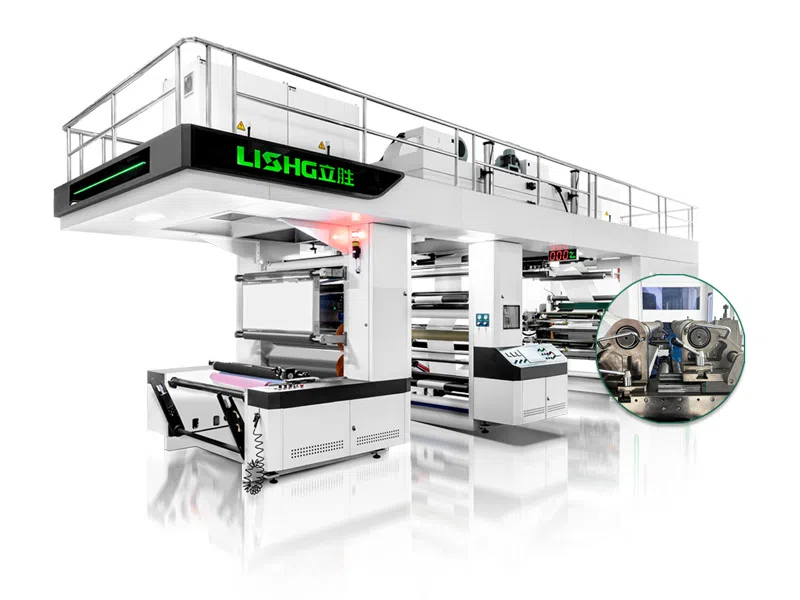
For example, a converter running 1200 mm wide, six-color PET composite film at around 280 m/min with tight register requirements would typically evaluate both platforms. If the production plan prioritizes independent servo control and higher speed potential, MASTER is the more relevant direction. If the investment structure and job mix favor a servo gear platform, KING becomes the practical starting point.
How the Press Platform Is Matched to the Production Profile
Width, color count and drive architecture should be considered together rather than one after another. For example, a project may require a 1200 mm working width, six or eight colors, high-speed production and tight register requirements. Those requirements describe the production profile; they do not mean that width or color count alone determines the drive system.
| Production Factor | What Is Reviewed | How It Affects Configuration |
|---|---|---|
| Web width | 600 / 800 / 1000 / 1200 / 1400 / 1600 mm or custom | Defines the required machine and web-handling width |
| Printing width | Actual printed area and print layout | Helps determine the practical printing configuration |
| Color requirement | 4 colors or more according to the product requirement | All series can be customized for 4+ color production |
| Production speed | Target speed and realistic production conditions | Helps determine the suitable drive and machine platform |
| Register requirement | Required register performance and substrate behavior | Influences drive, control and complete web-path configuration |
Maintenance Differences Buyers Should Understand
The maintenance work is not simply a question of whether a press has gears. The component groups that require inspection are different, and maintenance planning should follow the actual drive architecture used on the machine.
Gear-Driven Press
Maintenance includes gear condition, lubrication, bearings, mechanical transmission components, servo motors, drives and control systems. Mechanical transmission therefore remains an important part of preventive maintenance.
Gearless Press
Without the inter-unit mechanical gear train, maintenance attention shifts toward servo motors, servo drives, bearings, electrical connections, sensors and electronic synchronization.
Engineering Support
Maintenance recommendations are developed around the actual machine configuration so operators and maintenance teams know which mechanical, electrical and control components require regular attention.
Information Needed Before Developing the Press Configuration
Because the flexo presses are developed around project requirements, a useful production profile is more valuable than selecting a machine only from a model name. The following information provides the basis for discussing the appropriate platform and configuration.
Substrate & Web Width
Main substrates, normal material width, maximum material width and relevant web characteristics.
Printing Requirement
Printing width, number of colors, printing sides, register requirements and main print layouts.
Production Target
Expected production output, target operating speed, main applications and production schedule.
Factory Conditions
Available installation space, electrical conditions, environmental requirements and relevant supporting equipment.
Investment Plan
Planned production capacity, investment structure, automation expectations and long-term expansion requirements.
Gearless vs Gear-Driven Flexo Press FAQ
Is a gearless flexo press always the better choice?
Not necessarily. Gearless technology provides a different drive architecture and can be particularly relevant to high-speed production requiring independent servo control. The final decision still depends on the substrate, speed, width, register requirements, production volume and investment plan.
Can a servo gear press handle demanding production?
Yes. The KING platform uses servo gear transmission and is designed for high-volume multi-substrate production around 300 m/min. The appropriate configuration depends on the customer's actual production requirements.
Does gearless technology automatically guarantee better register?
Drive architecture is an important factor, but register performance also depends on the complete press design, web handling, substrate behavior, control system and operating conditions. The drive system is not the only variable.
How do MASTER and KING differ?
MASTER is the flagship full-servo gearless CI platform, with a platform reference of up to 500 m/min. KING is a servo gear CI platform developed for high-volume multi-substrate production around 300 m/min. Width, color count and other configuration details are developed according to the project rather than fixed only by the model name. For example, a 1200 mm six-color PET film project might evaluate both, with the final choice depending on speed and register priorities.
What width options are available?
Standard widths are 600, 800, 1000, 1200, 1400 and 1600 mm. Customized widths are also available.
Can all LISHG series be configured for more than four colors?
Yes. All flexo press series support customization for 4 colors and above. Color count should be treated as part of the production configuration.
What information should I provide for a quotation?
Please provide the main substrates, normal and maximum material width, required printing width, number of colors, printing sides, expected production output, target speed, register requirements and other relevant process information. The machine configuration can then be developed around the actual production profile.
Compare the Drive, Then Check the Complete Production Profile
Gearless and gear-driven flexo presses use different drive architectures, but the correct choice cannot be determined by drive type, machine width or color count alone. The substrate, web width, printing width, production speed, color requirements, register expectations and operating conditions should be reviewed as one production profile.
Within the range, MASTER provides a full-servo gearless CI platform, while KING provides a servo gear CI platform for high-volume multi-substrate production. Both are developed around project requirements, with standard widths of 600, 800, 1000, 1200, 1400 and 1600 mm plus customized options, and 4+ color configurations available across the series.
Need Help Comparing Gearless and Gear-Driven Options?
Send your substrate types, normal and maximum material width, required printing width, color count, printing sides, target speed, expected production output and register requirements. The engineering team can review the production profile and develop the appropriate press configuration with you.
Submit Your Production Parameters
