
Apex Series CI Flexo Press: Application Guide for Film, Paper, and Woven PP
Choosing a CI flexo press starts with the jobs it needs to run, not the highest number on the specification sheet. When we prepare an Apex quotation, we normally begin with the substrate, working width, color count, print sides, register requirement, expected running speed, and changeover pattern. Those details tell us much more about the suitable machine configuration than speed alone.
The Apex Series is a servo gear driven CI flexo platform for flexible film, paper packaging, and selected woven PP applications. The configuration described on this page is specified up to 250 m/min with a register accuracy of ±0.15 mm. These figures refer to the referenced configuration rather than every Apex machine, because the practical running point changes with substrate, ink coverage, print design, drying demand, and other job conditions.
Is the Apex platform worth considering for your production?
When Apex makes sense
Apex is worth comparing when a basic CI press no longer gives enough control over register and production consistency, while a full gearless platform is not yet necessary for the order mix.
Typical application groups
The platform can be configured for flexible packaging film, paper packaging, and selected woven PP work, including applications requiring multi-color or double-side printing.
What we need before quoting
Give us representative substrates, working width, colors, print sides, target speed, register tolerance, and expected job mix. That information lets engineering size the press around the work instead of around a generic machine specification.
What the Apex architecture is intended to solve
Apex uses a servo gear driven CI architecture. In practical terms, the machine combines servo-controlled motion with a geared transmission system. For converters, the relevant question is not whether the architecture sounds advanced; it is whether it gives the required register control, running stability and production capacity for the jobs on the floor.
| Item | Apex reference | What it means for the buyer |
| Drive architecture | Servo gear driven CI | Servo-controlled motion with a geared CI transmission architecture. |
| Speed | Up to 250 m/min for the referenced configuration | The actual running speed still has to be matched to substrate, print coverage, ink and drying conditions. |
| Color configuration | 4+ colors, customized | Color count should follow the real order mix rather than occasional maximum-color jobs. |
| Working width | 600 / 800 / 1000 / 1200 / 1400 / 1600 mm, plus custom options | The useful width is determined by actual web sizes and nesting efficiency. |
| Register accuracy | ±0.15 mm for the referenced configuration | Use the required print tolerance when reviewing the machine rather than treating one figure as a universal result. |
| Substrate groups | Film, paper and selected woven PP | Web tension, ink behavior and drying requirements change with the material. |
| Register control | Camera-based automatic register control available | Useful when multi-color jobs require consistent register control during production. |
| Sleeve configuration | Available | Can be useful when the job mix involves frequent plate or job changes. |
Where Apex fits best on the production floor
Flexible film with demanding register
If multi-color film work makes register consistency a daily production issue, the servo-driven architecture and automatic register control become practical reasons to consider Apex.
Paper packaging with mixed grades
Paper changes the web behavior, ink absorption and drying balance. Apex can be configured around these conditions when paper work represents a meaningful part of the order book.
Woven PP with one- or two-side printing
Woven PP requires attention to surface structure, ink transfer and web handling. Selected Apex configurations can be built for double-side work such as 4+4 or 6+6 color arrangements.
Mixed production
A mixed film-and-paper order book needs more engineering review than a single-substrate plant. Material changes, drying and tension conditions should be discussed before the machine layout is fixed.
Application decision matrix
| Application | Apex fit | Main engineering points | Information to provide |
| Flexible packaging film | Strong fit | Web tension, register, drying, ink coverage and material structure. | Film type, thickness, width, colors, print repeat and register requirement. |
| Paper packaging | Strong fit for defined paper jobs | Paper grade, grammage, web behavior, ink absorption and drying. | Paper grades, width range, colors, print side and typical job mix. |
| Woven PP bags | Dedicated configuration | Surface structure, ink transfer, web handling and one- or two-side printing. | Fabric construction, width, colors per side and downstream requirements. |
| Film + paper mix | Engineering review | Different tension, drying and ink conditions between substrates. | Representative materials and the percentage of each job group. |
| Gearless high-end production | Compare with Master | If gearless architecture, high-end precision and high-speed capability are central requirements. | Target production level, register tolerance and long-term machine strategy. |
Apex for Flexible Packaging Film
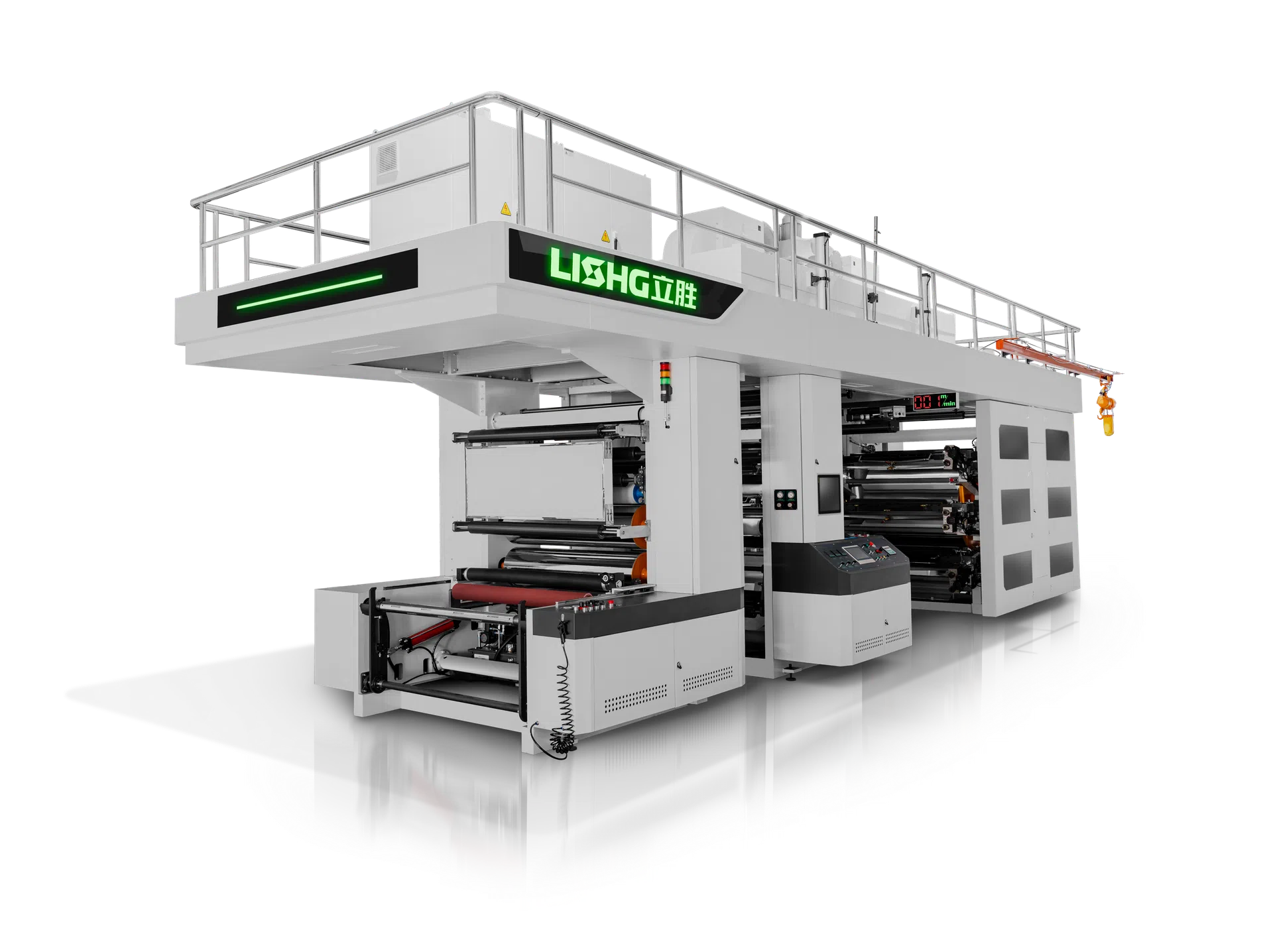
Film is one of the clearest applications for a CI press because the web needs stable support while several print units work around the central impression drum. For film jobs, we normally ask for the actual material structures before fixing the press specification. PE, PET, BOPP, PVC and nylon films can behave very differently during printing.
The first discussion is usually not maximum speed. It is whether the machine can maintain the required register while the web is running at the speed that makes economic sense for the customer's jobs. Ink coverage, drying demand and film behavior all influence that point.
For multi-color film production, the Apex servo gear architecture and available camera-based register control provide a useful combination when the converter needs tighter production control without moving directly to a full gearless platform.
Tell us the actual film types and thickness range before drying and tension details are finalized.
4+ colors can be customized around the real order mix rather than occasional special jobs.
Available standard widths include 600 to 1600 mm, with custom requirements reviewed separately.
Set the required tolerance from the artwork and product specification instead of using a generic target.
Apex for Paper Packaging
Paper introduces a different set of production variables. Grade, grammage, surface condition and ink absorption affect how the web behaves and how quickly the ink system can run. A press specification that works well for a thin film should not simply be copied to a paper job.
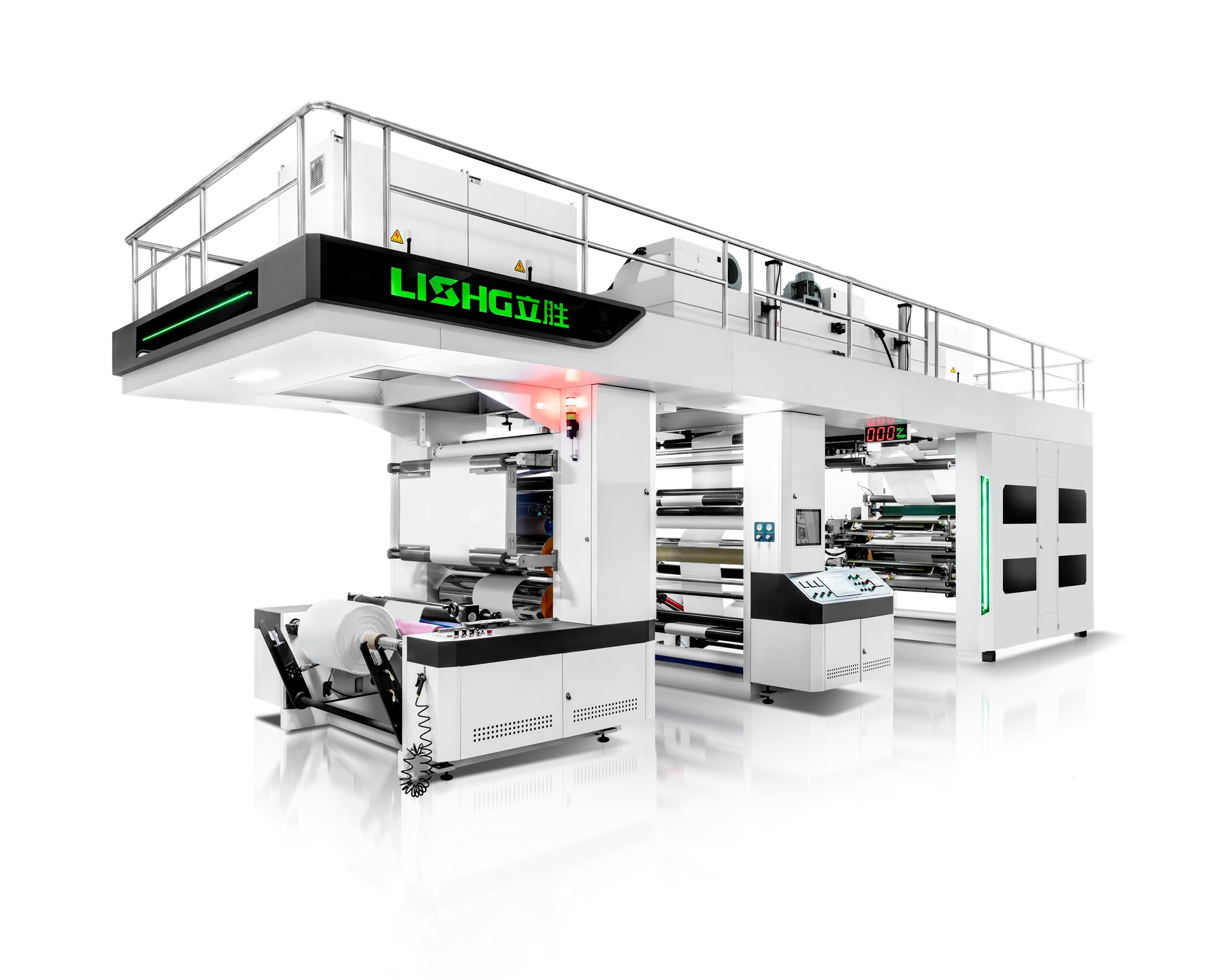
When we review paper applications, we look at the customer's normal paper range rather than one ideal material. If the same machine is expected to handle several grades, representative samples are useful before the drying and web-handling configuration is finalized.
The referenced 4-color Apex paper configuration is intended for converters that need a servo gear driven CI platform for paper packaging work and want production control beyond a basic configuration.
| Paper issue | Why it matters | What to provide |
| Grade and grammage | Changes web behavior and ink response. | Normal paper grades and grammage range. |
| Print coverage | Influences drying demand and practical running speed. | Representative artwork or print coverage information. |
| Working width | Affects nesting and usable production width. | Current and planned web widths. |
| Changeover frequency | Influences the value of sleeve and automation options. | Typical number of jobs and job changes. |
Apex for Woven PP Bag Printing
Woven PP is not simply another film application. The woven surface changes ink transfer and print appearance, while the fabric construction affects how the web behaves through the press. For this reason, the machine layout needs to follow the actual bag production requirement.
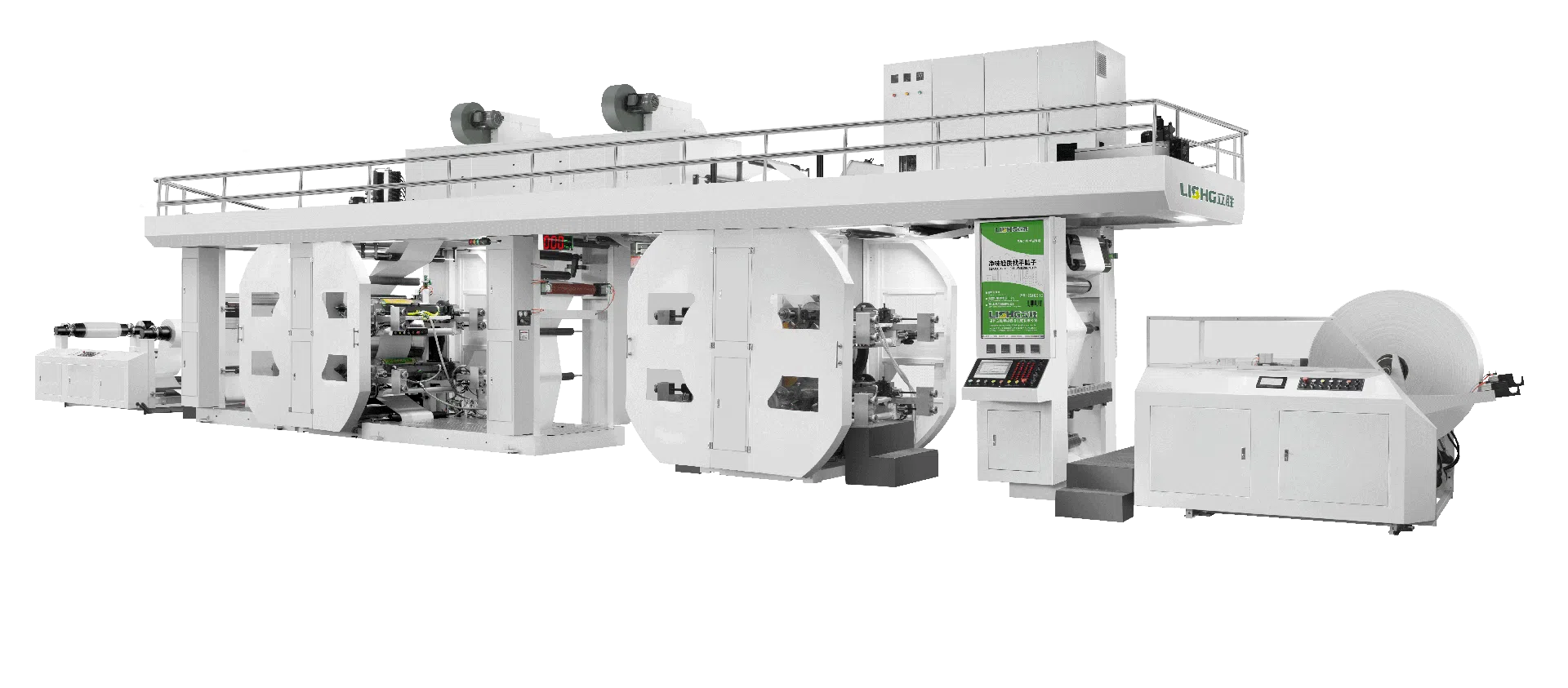
Selected Apex configurations can be arranged for one-side or double-side printing. For double-side work, 4+4 and 6+6 color arrangements are available for suitable applications. We would not recommend choosing the higher color configuration only because it is available; the decision should come from the artwork mix and the percentage of jobs that genuinely need it.
If folding, winding or other downstream requirements are part of the line, they should be stated during quotation. This allows the engineering team to consider the complete material path rather than treating the printing section as an isolated machine.
4+4 configuration
Suitable when double-side printing is required but the normal artwork does not justify a six-color arrangement on each side.
6+6 configuration
Consider it when the normal woven PP order mix contains a meaningful amount of higher-color double-side work.
Web handling
Fabric construction and actual web behavior should be reviewed before finalizing tension and winding requirements.
Five configuration decisions we make before finalizing an Apex press
A useful quotation is built around the order book. These are the five points we normally settle before discussing optional equipment.
Start with real substrates
List the materials that represent normal production, not only the easiest material to run.
Set the useful width
Use actual web widths and nesting requirements to decide whether 600, 800, 1000, 1200, 1400 or 1600 mm is appropriate.
Count the normal jobs
Choose color capacity from regular production. Occasional special artwork should not automatically determine the whole machine.
Set a usable target
The specified maximum is useful for comparing capability, but the commercial target should come from the real jobs.
Look at job frequency
If the press changes jobs frequently, sleeve and suitable automation options can have more value than simply adding capacity.
What the main systems change in day-to-day production
Servo gear drive
The servo system provides controlled drive movement while the machine retains a geared CI transmission architecture. The benefit is relevant when motion control and register stability are important production concerns.
Automatic register control
Camera-based register monitoring can detect print position changes and make corrections during production. This is especially useful for multi-color work where manual correction would add unnecessary operator workload.
Sleeve plate cylinder
Sleeve configurations make more sense when the order book contains frequent job changes or several repeat jobs that require regular plate replacement. If the job mix is stable, the benefit may be smaller.
Drying and heating
Drying capacity needs to be matched to substrate, ink system, print coverage and running conditions. We therefore review the material and print sample before fixing the final drying arrangement.
Apex is not automatically the right answer
In our quotation work, we do not start with the most advanced machine. We start with the production problem. The following comparison is more useful than ranking the machines simply from low to high.
| Platform | Main position | Consider it when... | Main question |
| Ultra | Mid-speed CI with practical investment | The priority is straightforward CI production and controlled investment. | Do we actually need the additional servo-driven production control of Apex? |
| King | Gear-sleeve CI focused on output and production efficiency | The order book is strongly driven by production output and investment balance. | Is output efficiency more important than the specific control requirements that lead us toward Apex? |
| Apex | Servo gear driven CI | Register control, production stability and servo-driven operation are important. | Will the order mix actually use the additional control and automation? |
| Master | Full-servo gearless CI | High-end precision, high-speed production and gearless architecture are core requirements. | Does the long-term production strategy justify moving to a full gearless platform? |
Do not turn the 250 m/min figure into an output forecast
A maximum speed is a machine capability, not a guaranteed production rate. For a real investment decision, we look at the speed that can be used on the customer's normal jobs, how often the press changes jobs, and whether the rest of the production line can handle the output.
Usable running speed
A job with heavy ink coverage or demanding drying conditions may run differently from a simple job. The machine should therefore be evaluated against representative production work.
Changeover pattern
A plant running many short jobs may gain more from practical changeover improvements than from a higher theoretical speed.
Downstream capacity
If printing can produce faster than the next process can consume, additional press speed does not automatically increase finished output.
What to send us for an Apex quotation
The more closely the information represents normal production, the less guesswork is required during machine selection.
Materials
- Film type and thickness
- Paper grades and grammage
- Woven PP construction
- Representative material samples where possible
Print requirements
- Working width
- Color count
- One-side or double-side printing
- Required register tolerance
Production targets
- Expected running speed
- Typical order mix
- Job change frequency
- Future capacity expectations
Downstream requirements
- Winding requirements
- Folding requirements where applicable
- Finished product format
- Existing line limitations
You can also start with the LISHG product selector if you are still deciding between different CI and stack flexo platforms.
A practical five-step way to select the machine
Send real jobs
Start with normal substrates and representative artwork rather than an idealized specification.
Fix width and colors
Set the useful web width and normal color requirement before adding special configurations.
Set a realistic speed
Use the production speed the jobs can actually sustain, not only the maximum machine specification.
Add useful systems
Choose register control, sleeve arrangements and other options only when the order book gives them a clear purpose.
Review the complete line
Check winding, folding and downstream capacity before approving the final machine layout.
Apex Series CI Flexo Press FAQ
Is 250 m/min the actual production speed of every Apex machine?
No. The 250 m/min figure refers to the Apex configuration described in this guide. The useful running speed for a specific job depends on substrate, ink coverage, drying, print design and other production conditions.
Is Apex a gearless CI flexo press?
No. Apex is a servo gear driven CI platform. If gearless architecture is a core requirement, the Master full-servo gearless platform should be included in the comparison.
Can Apex print both film and paper?
Yes, suitable Apex configurations can be developed for film and paper applications. When one machine needs to handle both, we need to review the actual material range because tension, ink behavior and drying conditions can differ substantially.
How many colors can an Apex press have?
Apex configurations start from 4+ colors and can be customized according to the application. The color count should be selected from the normal order mix rather than occasional special jobs.
When does a sleeve plate cylinder make sense?
Sleeve arrangements become more useful when a plant handles frequent job or plate changes. If production is dominated by a small number of stable jobs, the investment decision should be reviewed against the actual changeover pattern.
Can Apex handle double-side woven PP printing?
Yes. Selected Apex configurations are available for double-side woven PP work, including 4+4 and 6+6 arrangements. The suitable configuration depends on the fabric, artwork and normal color requirement.
How is Apex different from Ultra and King?
Ultra is positioned around practical mid-speed CI production and investment control. King focuses on output, production efficiency and investment balance with a gear-sleeve CI architecture. Apex moves toward servo gear driven operation and stronger register-control requirements.
When should we compare Apex with Master?
Compare Apex with Master when the project is moving toward high-end, high-speed, high-precision production and gearless architecture is part of the long-term machine requirement. If gearless technology is not itself a requirement, Apex may provide a more balanced solution.
Select Apex around the work you actually intend to run
Apex is not simply a faster version of a basic CI press. Its value comes from the combination of servo gear driven operation, register control and a configuration range that can be adapted to different film, paper and woven PP applications.
The most useful starting point is therefore the production order book. If the plant needs tighter register control, more stable multi-color production and a higher level of machine control, Apex deserves a serious comparison. If the work does not require those capabilities, Ultra or King may provide a better investment balance. If full gearless architecture and high-end precision are central to the long-term strategy, Master should be evaluated instead.
The final machine should solve a defined production problem. That is the basis on which we recommend the Apex configuration and prepare the quotation.
Need an Apex configuration for your actual jobs?
Send us your substrate range, working width, color count, print sides, target speed and register requirement. Our engineering team can then review the application and recommend a suitable Apex configuration instead of starting from a generic machine specification.
Request an Apex Configuration Review →