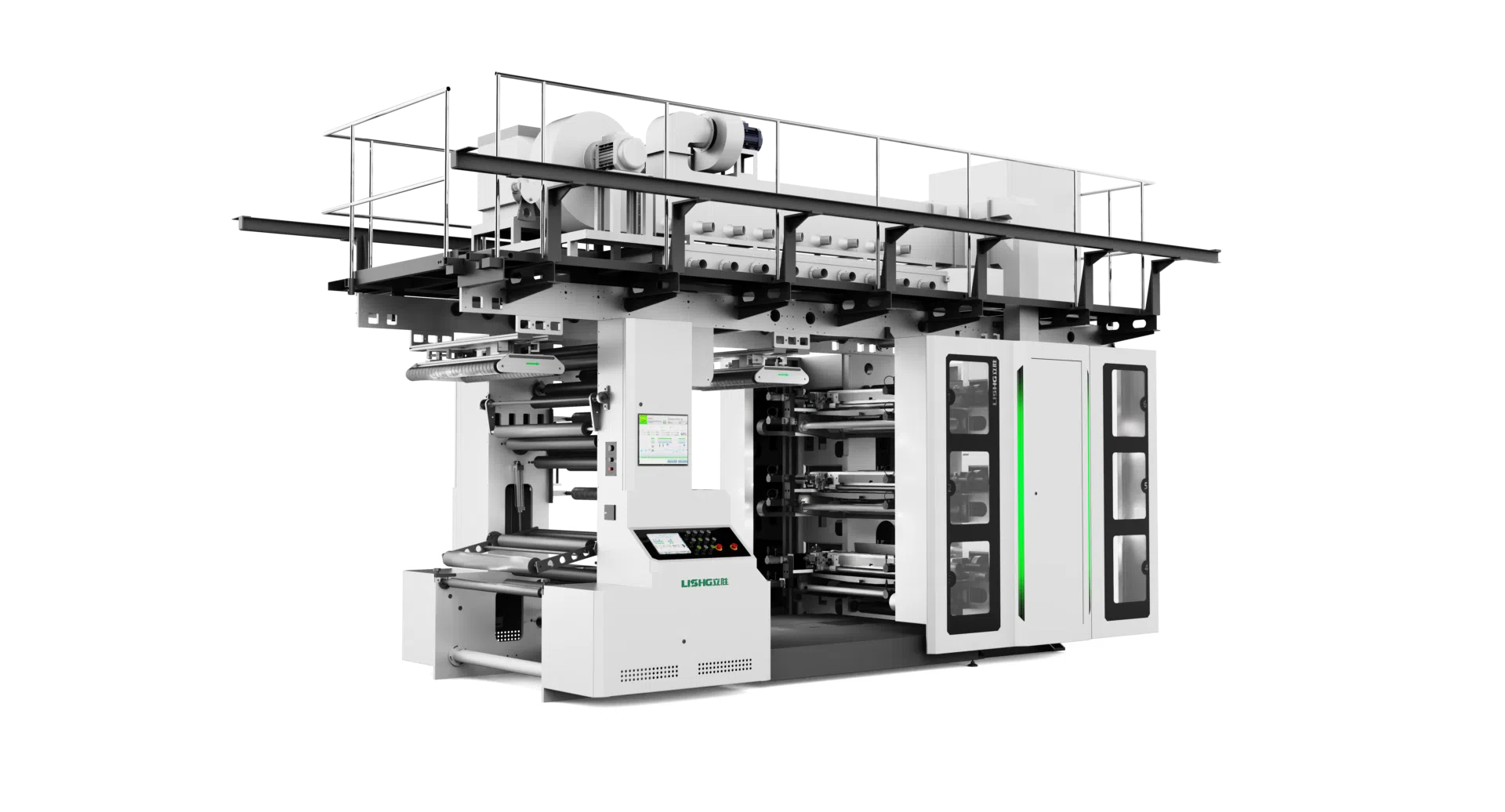
Flexible Film Printing Guide
Can a Stack Flexo Printing Machine Print PE, PP, CPP and PET Film?
Yes. A properly configured stack flexo printing machine can print PE, PP, BOPP, CPP and PET films. However, whether a stack flexographic press is the right choice depends on more than the film material itself.
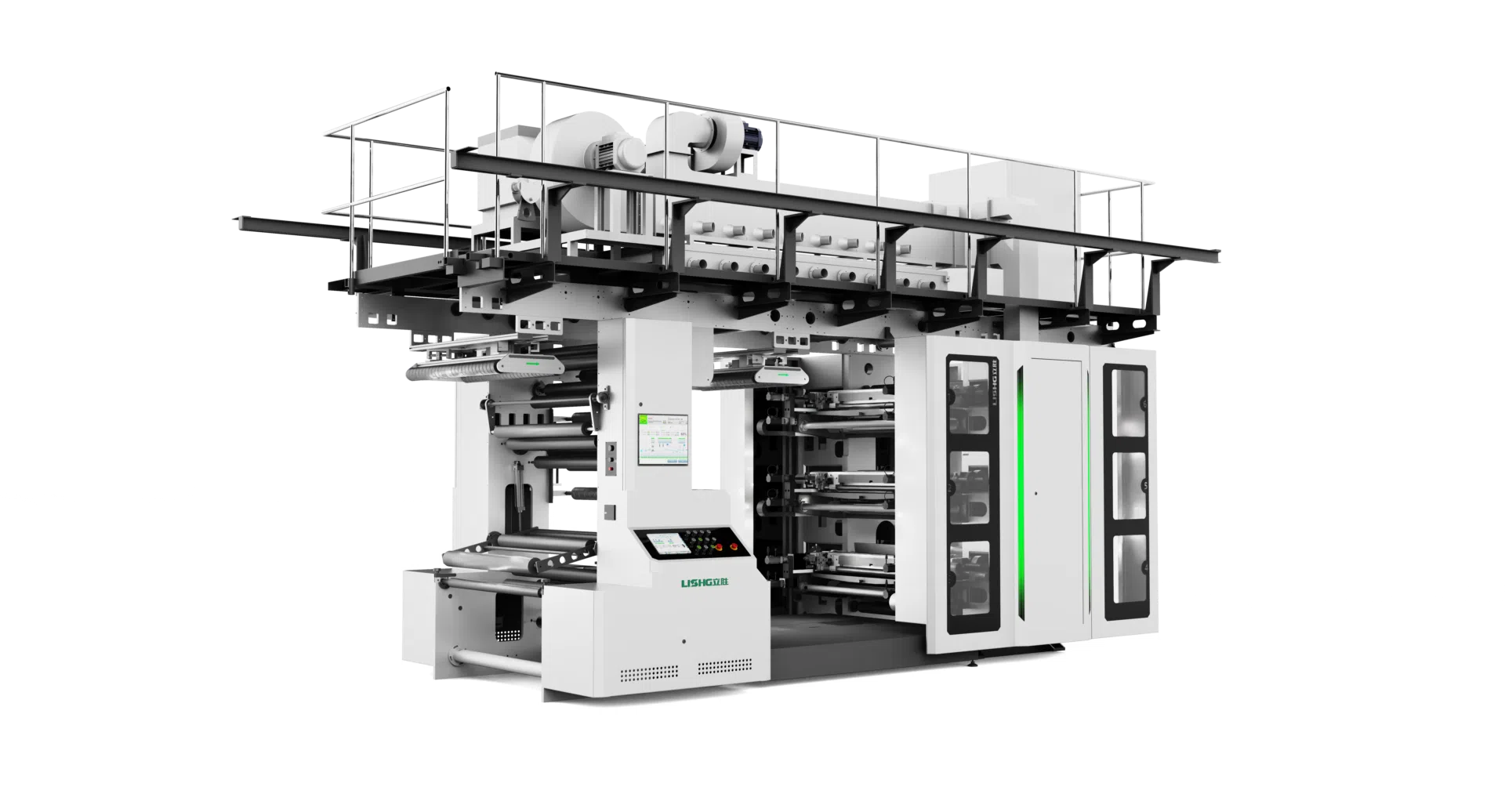
Film thickness, web width, number of colors, printing speed, register requirements, ink system, drying capacity, surface treatment and downstream processes such as lamination can all affect the recommended machine configuration.
For flexible packaging converters, the better question is not simply whether a stack flexo press can print plastic film. It is:
Which flexo press architecture and configuration are suitable for my plastic film and production requirements?
This guide explains how stack flexo printing works with PE, PP, BOPP, CPP and PET films, what machine specifications matter, and when a CI flexo press may be more appropriate.
In This Guide
Quick Answer
Can Stack Flexo Print PE, PP, CPP and PET Film?
Yes. Stack flexo printing machines can be configured for a wide range of flexible-film applications.
On mobile, this comparison stacks by row for easier reading.
| Film | Stack Flexo Printing | Main Considerations |
|---|---|---|
| PE | Yes | Film tension, surface treatment, ink adhesion |
| PP | Yes | Surface energy, web stability, register |
| BOPP | Yes | Tension control, register, drying |
| CPP | Yes | Ink compatibility, treatment, lamination |
| PET | Yes | Ink selection, drying, dimensional stability |
"Can print" does not mean "every stack flexo machine is suitable for every film."
Printed flexible-film samples from LISHG presses — PE, BOPP, PET and laminated packaging structures:
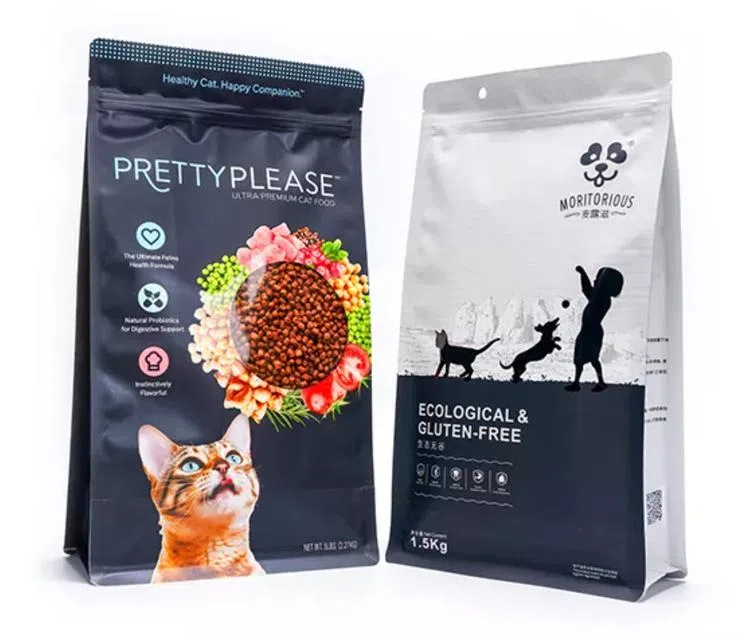
PE / PET pouch
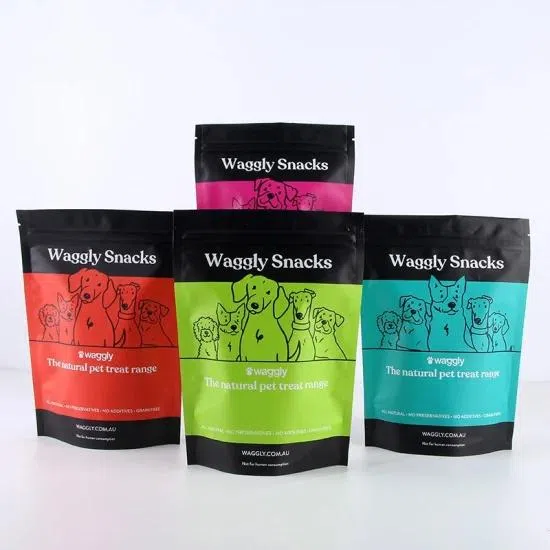
BOPP film pack
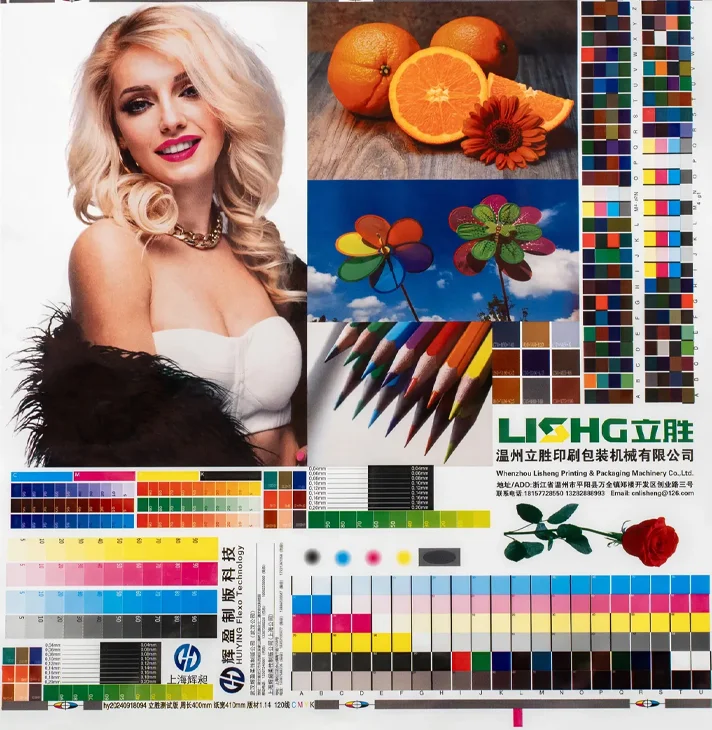
Film sample
A 30-micron PE film running at high speed with demanding multi-color register presents very different technical requirements from a thicker film printed at a lower speed.
The machine should therefore be selected from the complete production specification.
01 / Substrates
What Films Can a Stack Flexo Printing Machine Print?
1. PE Film
PE, or polyethylene, is one of the most widely used substrates in flexible packaging.
Common PE applications include:
PE film can be relatively soft and stretch-sensitive. During flexographic printing, excessive or unstable web tension can cause film deformation and color-to-color register problems.
For PE film printing, converters should evaluate:
For thin PE film, stable web handling is particularly important.
2. PP and BOPP Film
PP stands for polypropylene, while BOPP means biaxially oriented polypropylene.
BOPP is widely used in flexible packaging because of its combination of optical properties, mechanical strength and packaging performance.
Typical applications include:
A stack flexo press can print PP and BOPP when its web-handling, ink and drying systems are properly matched to the substrate.
For demanding multi-color BOPP applications, register stability should be evaluated together with the press architecture rather than looking only at nominal printing speed.
3. CPP Film
CPP means cast polypropylene.
CPP is commonly used in flexible packaging as a sealing or functional layer and is frequently found in laminated structures.
Typical applications include:
When CPP is printed, the converter should consider:
If the printed CPP will be laminated after printing, the printing process must be considered as part of the complete converting process.
A machine manufacturer should know whether the CPP is being printed for direct use, lamination or another downstream process.
4. PET Film
PET stands for polyethylene terephthalate.
PET has good dimensional stability and is widely used in flexible packaging and laminated packaging structures.
Typical applications include:
PET is generally more dimensionally stable than many thin PE films, but the printing process still requires appropriate control of web tension, ink selection, drying, printing pressure, anilox specification and register.
The correct configuration depends on the PET grade, thickness, printing requirements and final packaging structure.
02 / What Matters
What Makes a Stack Flexo Press Suitable for Plastic Film?
A stack flexographic printing machine is not suitable for plastic film simply because "PE" or "PET" appears on the specification sheet.
The printing result depends on several systems working together.
Web Tension Control
Web tension is one of the most important variables when printing flexible films.
A stable tension system helps control:
The thinner and more stretch-sensitive the film, the more carefully the tension range needs to be controlled.
Ask not only for the maximum machine speed, but also about the usable production speed for the actual film thickness and printing job.
Corona Treatment
Many plastic films have relatively low surface energy. Without adequate surface treatment, ink may have difficulty wetting and adhering to the film.
Corona treatment is commonly used to increase surface energy and improve ink wetting and adhesion.
For plastic-film printing, corona treatment should be evaluated together with:
Surface treatment is part of the overall ink-substrate process rather than an isolated machine feature.
Ink and Drying System
Plastic film is generally non-porous, so the ink cannot simply absorb into the substrate as it can with many paper materials.
The flexo press therefore needs an appropriate combination of:
The required drying configuration depends on the ink type, number of colors, coverage, film and production speed.
If the printed film will be laminated, ink drying becomes even more important because the printing quality can affect the performance of the finished laminated structure.
Register Control
Multi-color flexible packaging requires consistent color-to-color register.
Register stability can be affected by:
A good machine configuration needs to control the entire web path rather than relying on register correction alone.
03 / Thin Film
Can Stack Flexo Print Thin Plastic Film?
Yes, but thin-film printing requires more careful machine configuration.
Thin PE, BOPP and other flexible films can be sensitive to tension and deformation.
When evaluating a stack flexo press for thin film, ask the manufacturer about:
1. Minimum thickness
Minimum recommended film thickness.
2. Tension range
Tension-control range for the target film.
3. Web guiding
Web-guiding system along the full path.
4. Register
Register capability for multi-color work.
5. Drying
Drying capacity for the ink and coverage.
6. Usable speed
Maximum recommended production speed for the target film — not only mechanical speed.
7. Rewinding
Rewinding performance on thin film.
A machine's maximum mechanical speed should not be treated as the guaranteed production speed for every substrate.
A press rated at 200 m/min may operate at a lower practical speed on a particular thin PE film when drying, ink coverage or register requirements become the limiting factors.
04 / Architecture
Stack Flexo vs. CI Flexo for Plastic Film
This is one of the most important decisions when purchasing a flexographic printing machine.
Both stack and CI flexographic presses can print plastic film, but their mechanical architectures are different.
A stack press arranges the printing units in a stack configuration. A CI press uses a large central impression cylinder to support the web as it passes through multiple printing units.
The appropriate architecture depends on the application.
On mobile, this comparison stacks by row for easier reading.
| Requirement | Stack Flexo | CI Flexo |
|---|---|---|
| PE film | Suitable with correct configuration | Suitable |
| PP/BOPP film | Suitable with correct configuration | Suitable |
| CPP film | Suitable | Suitable |
| PET film | Suitable | Suitable |
| Thin stretch-sensitive film | Application dependent | Often worth evaluating |
| High-speed multi-color film | Application dependent | Strong option |
| Mixed substrates | Flexible configuration | Application dependent |
| Compact machine architecture | Advantage | Larger architecture |
| Investment-sensitive projects | Often attractive | Typically higher investment |
| Demanding flexible packaging | Application dependent | Common configuration |
There is no universal rule that says "plastic film requires CI" or "plastic film requires Stack."
The correct decision depends on the combination of:
substrate + thickness + colors + register + speed + production volume + investment + downstream process
For thin, stretch-sensitive PE or BOPP films with demanding multi-color register and high production volumes, CI architecture should be seriously evaluated because continuous web support can be advantageous. See MASTER gearless CI and the wider CI Flexo range.
For applications where production flexibility, mixed substrates, modularity or investment level are more important, a stack press can be a practical solution.
05 / When Stack Fits
When Is a Stack Flexo Printing Machine a Good Choice?
A stack flexo press can be suitable when a converter needs a flexible machine capable of handling multiple substrates and production requirements.
Typical reasons to consider a stack configuration include:
Multiple substrates
Film, paper, nonwoven and mixed jobs
Flexible production
Frequent format / SKU changes
Plastic film printing
PE / PET / BOPP with correct configuration
Paper & nonwoven
Beyond film-only production
Moderate speeds
Where brochure max speed is not the driver
Multiple SKUs
Changeover efficiency matters
Double-sided printing
Stack layout advantage
Investment-sensitive
Practical entry vs high-end CI
Not full high-speed CI
When CI architecture is not required
Stack selection summary:
Swipe sideways to view the full table.
| Production need | Why Stack Flexo Fits | LISHG Direction |
|---|---|---|
| Mixed substrates | Flexible unit arrangement and job mix | HONOR Classic / Servo |
| Faster changeovers | Sleeve and servo options available | HONOR Servo Sleeve |
| Double-sided work | Stack architecture supports duplex layouts | Configure print side with the job mix |
| Budget / modularity | Often more investment-friendly than high-speed CI | Match classic vs servo to control needs |
LISHG's HONOR Stack Flexo platform is designed for applications involving flexible films and other packaging substrates. Depending on configuration, the platform is available in classic, servo and sleeve configurations, allowing the press to be matched to different production requirements.
For converters who need tighter control and more automation, a servo-driven stack configuration can provide additional control over web handling and printing parameters.
06 / When CI Fits
When Should You Consider a CI Flexo Press Instead?
A CI flexo press deserves consideration when your production is primarily focused on high-volume flexible packaging and demanding film applications.
Typical factors include:
Thin flexible films
Stretch-sensitive webs needing stable support
High-speed multi-color
Where usable speed and register must hold together
Tight register
Demanding color-to-color alignment
Large volumes
Long runs and high annual meters
PE / BOPP focus
Film jobs with register-critical graphics
Complex laminates
Printed film feeding lamination lines
Long-run consistency
Stable quality over continuous production
CI evaluation checklist:
Swipe sideways to view the full table.
| If your profile is… | CI Flexo tends to fit when… |
|---|---|
| Primary substrate | Thin PE / BOPP flexible packaging film |
| Production style | High volume, fewer extreme format changes |
| Quality driver | Tight multi-color register at speed |
| LISHG platforms | MASTER gearless CI · KING CI |
LISHG provides several CI flexographic press configurations alongside its Stack Flexo range, including MASTER and KING.
Start with the application, rather than forcing every customer into the same press architecture.
07 / Specification
How to Choose a Stack Flexo Printing Machine for Plastic Film
Before requesting a quotation, prepare the following information.
Swipe sideways to view the full table.
| Item | What to Provide | Example |
|---|---|---|
| 1. Film material | Exact substrate grade | LDPE / LLDPE / HDPE / PP / BOPP / CPP / PET |
| 2. Film thickness | Micron range | PE 30–80 μm |
| 3. Printing width | Web / print / typical width | Sized to real jobs, not only max job |
| 4. Colors | Color count + specials | 4 / 6 / 8c + white / varnish |
| 5. Target speed | Usable production speed | e.g. 150 m/min (not only max 200) |
| 6. Downstream | Process after printing | Print → Laminate → Slit → Bag |
08 / Lamination
What About Printing Film for Lamination?
If the printed film will be laminated, the printing machine should be specified with the complete packaging structure in mind.
Important considerations include:
Swipe sideways to view the full table.
| Factor | Why It Matters for Lamination |
|---|---|
| Ink adhesion | Poor adhesion can fail in lamination or end-use |
| Ink drying | Incomplete drying affects bond strength and odor |
| Residual solvent | Critical for food packaging and laminate quality |
| Surface treatment | Supports wetting for ink and adhesive |
| Printing side | Must match the intended laminate structure |
| Film structure | Mono-film vs multi-layer changes process needs |
| Adhesive compatibility | Ink and adhesive systems must work together |
| Rewinding quality | Roll quality feeds the laminator stably |
The printing machine is only one part of the final packaging process.
09 / LISHG Platforms
LISHG Stack Flexo Printing Machines for Flexible Films
LISHG develops both Stack Flexo and CI Flexo printing machines, allowing converters to select the press architecture according to their production requirements.
HONOR Stack Flexo
Classic / Servo / Servo Sleeve for PE, PET, BOPP and mixed packaging substrates.
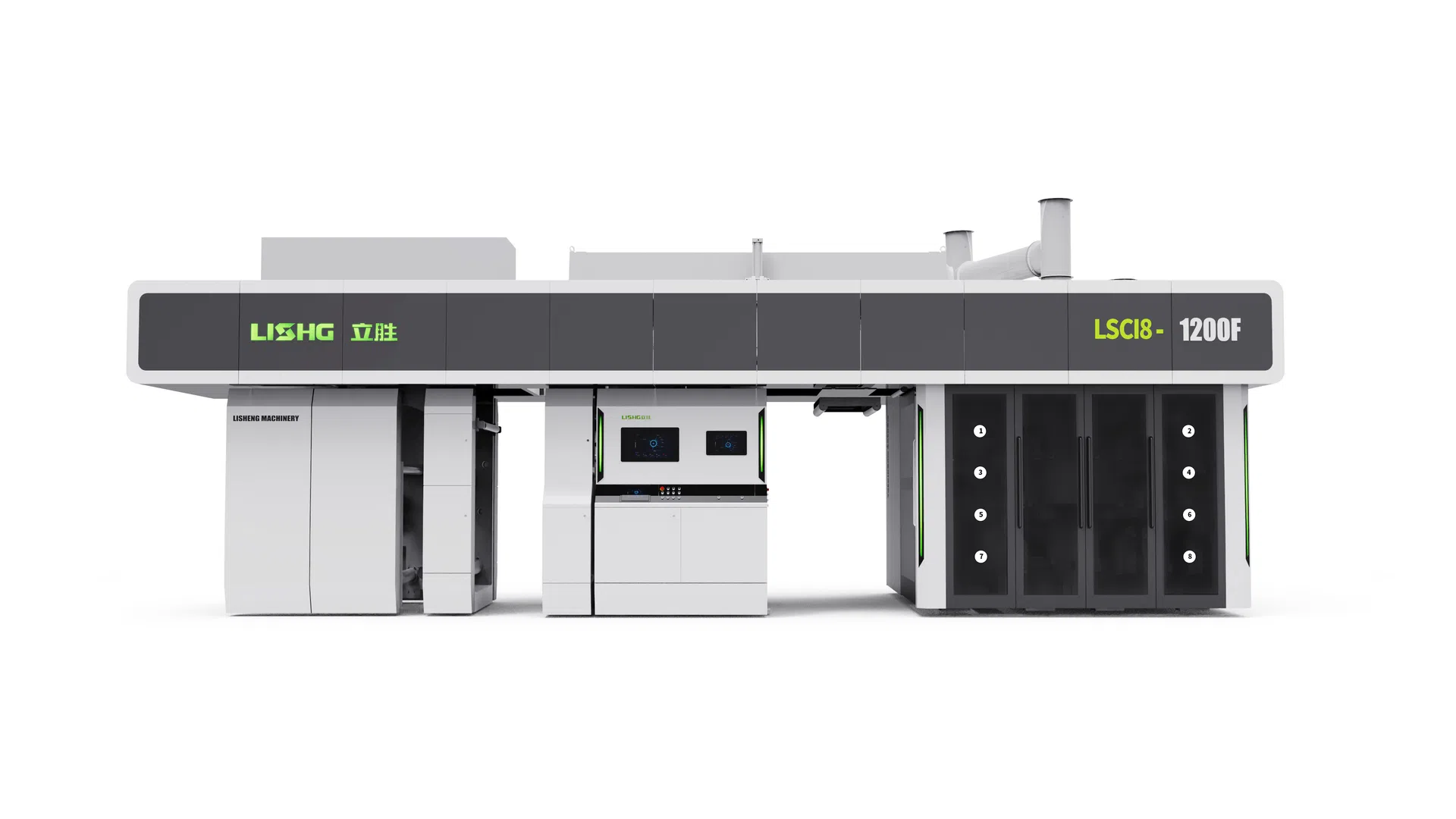
MASTER Gearless CI
For thin-film, high-speed multi-color work where continuous web support and register matter most.
Available configurations can include:
Swipe sideways to view the full table.
| Configuration Area | HONOR Stack Options | What It Supports |
|---|---|---|
| Drive / architecture | Classic / Servo / Servo Sleeve | Match control level to film and changeover needs |
| Printing width | Multiple printing widths | Size the press to real production widths |
| Colors | Multiple color configurations | 4 / 6 / 8c and special colors as required |
| Print side | Double-sided printing options | Where stack architecture is advantageous |
| Web handling | Automatic web guiding + servo-driven web handling | Film tracking, tension and register stability |
For applications requiring higher production performance or demanding thin-film register, LISHG also provides CI flexographic platforms such as MASTER and KING.
Start with the material and finished product. Then select the machine architecture.
10 / FAQ
Frequently Asked Questions
Can a stack flexo printing machine print PE film?
Yes. A properly configured stack flexo press can print PE film. Film thickness, tension control, surface treatment, ink adhesion, drying and register requirements should be considered when specifying the machine.
Can a stack flexo printing machine print PP film?
Yes. Stack flexo presses can print PP and BOPP films when the web-handling, ink and drying systems are matched to the substrate and production requirements.
Can a stack flexo printing machine print BOPP film?
Yes. BOPP is suitable for flexographic printing. For demanding multi-color applications, tension and register stability should be evaluated carefully.
Can a stack flexo printing machine print CPP film?
Yes. CPP can be printed on a suitable flexographic press. Surface treatment, ink compatibility, drying and subsequent lamination should be considered.
Can a stack flexo printing machine print PET film?
Yes. PET is commonly used for flexographic printing, particularly in flexible and laminated packaging. The ink system, drying, tension and printing parameters should match the PET substrate.
Is stack flexo suitable for flexible packaging?
Yes. Stack flexo can be suitable for flexible packaging, particularly when the required substrate range, production speed and register requirements fit the stack architecture. For demanding thin-film, high-speed flexible packaging applications, CI flexo should also be evaluated.
Is CI flexo better than stack flexo for PE film?
There is no universal answer. For thin, stretch-sensitive PE film with demanding multi-color register and high production volumes, CI flexo may provide advantages in web support. Stack flexo may be appropriate when production flexibility, mixed substrates, modularity or investment considerations are more important.
What is the most important factor when printing thin plastic film?
There is no single parameter. Stable web handling is critical, but tension, film characteristics, register, printing pressure, ink, drying and production speed all interact.
What information should I provide for a quotation?
Film material, film thickness, web width, printing width, number of colors, printing repeat, target production speed, ink type, printing side, lamination requirements, final packaging application and expected production volume.
Final Takeaway
A Stack Press Can Print These Films — Configuration Decides the Fit
A stack type flexo printing machine can print PE, PP, BOPP, CPP and PET film. But the material name alone does not determine whether a stack flexo press is the right solution.
Film material → Film thickness → Web width → Colors → Register → Speed → Ink → Drying → Downstream process
For converters looking for a flexible, modular solution across multiple substrates, a stack flexo press can be a practical choice.
For high-volume applications involving thin, stretch-sensitive films and demanding multi-color register, a CI flexo press may also be worth evaluating. LISHG provides both Stack Flexo and CI Flexo printing platforms, allowing the press architecture to be matched to the actual application.
Next Step
Tell Us Your Film and Production Target
Tell us your film material, thickness, printing width, number of colors and target production speed. LISHG can help you evaluate the appropriate flexo press configuration for your application.


